
Spanish Prime Minister Denies Moroccan Involvement in Ceuta Mass Border Crossing
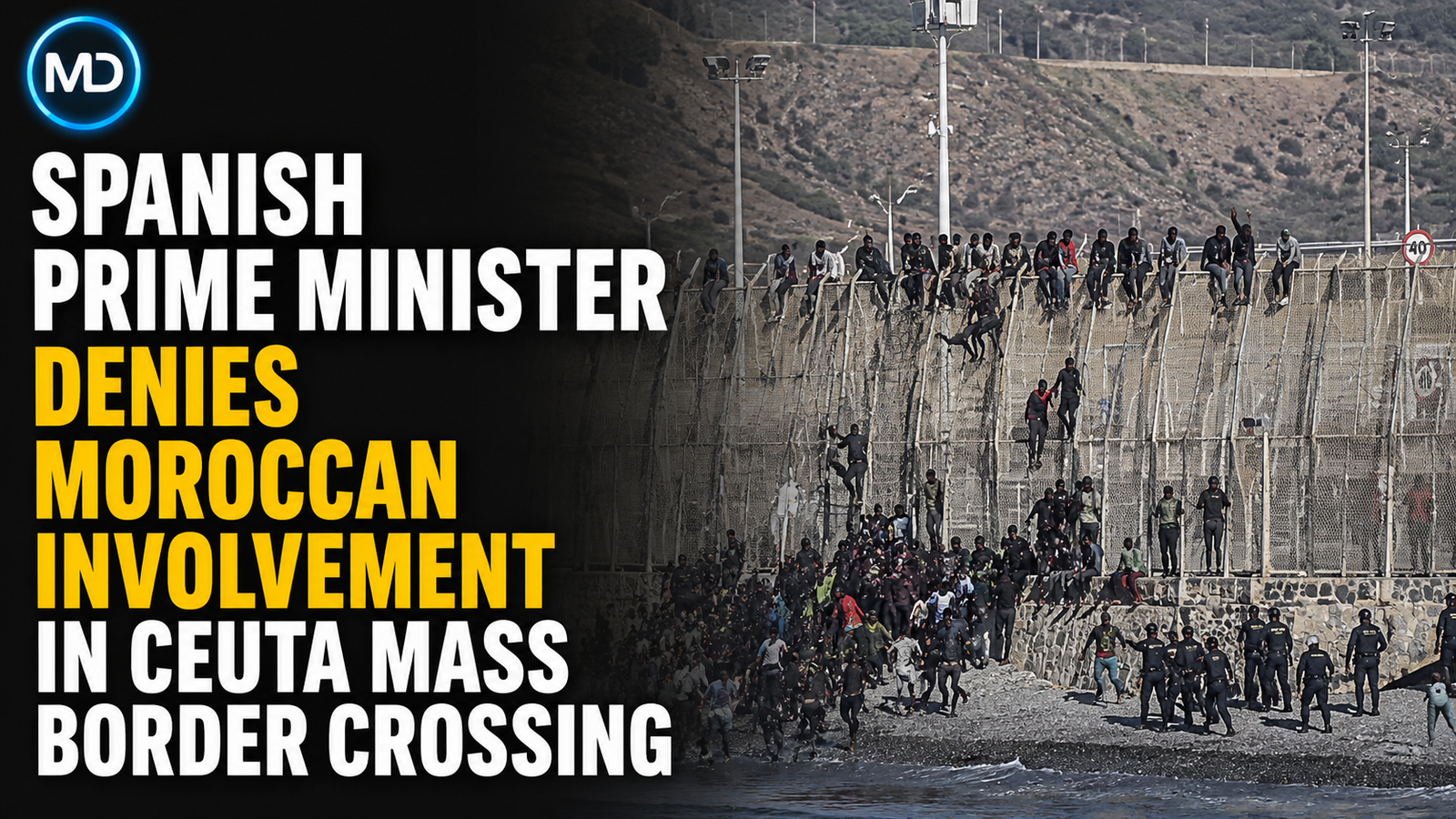
Spanish Prime Minister Pedro Sánchez has informed parliament that there is no evidence indicating the Moroccan government planned or facilitated a mass border breach into the Spanish territory of Ceuta. Sánchez stated that no diplomatic services, European bodies, or international organizations have provided solid proof pointing to state orchestration by Rabat regarding the late July incident.
The prime minister's address came after a judge-commissioned police report surfaced in media coverage alleging that Moroccan forces aided around 70,000 people in crossing the border. Sánchez acknowledged that while Moroccan forces permitted crossings during a 10-hour period on July 30, he has ruled out the direct involvement of the Moroccan government for the time being. Moroccan authorities have consistently denied enabling the crossings, though several migrants reported being encouraged to enter.
Political Backlash and Diplomatic Friction
The statement followed a demonstration in Madrid where roughly 50,000 people protested the government's response to the crisis. Denying that officials had received prior warnings, Sánchez said no intelligence had anticipated the eventual scale or probability of the breach. An estimated 141 people died attempting to reach Ceuta during the event.
Sánchez also addressed diplomatic tensions, noting that Spain summoned Morocco's ambassador on August 21 following remarks from two Moroccan ministers, including Justice Minister Abdellatif Ouahbi, who reiterated sovereignty claims over Ceuta and Melilla.
Opposition leaders launched sharp attacks in parliament. Conservative People’s Party leader Alberto Núñez Feijóo demanded Sánchez's resignation, citing incompetence. Meanwhile, Santiago Abascal, leader of the far-right Vox party, accused the prime minister of acting on behalf of Morocco's interests.
Migrant Status and Long-Term Measures
Although 90% of those who crossed returned to Morocco within 24 hours, several thousand individuals remain in Ceuta living on the streets or in temporary shelters, including at least 500 minors. Sánchez emphasized that domestic, European, and international laws mandate individual treatment for migrants, rejecting calls for mass summary deportations. Left-wing Sumar politician Aina Vidal similarly called for the protection of the unaccompanied children.
The Spanish government is expected to fund local accommodations in Ceuta rather than transfer migrants to the mainland. Calling for European solidarity, Sánchez highlighted that economic disparities will continue to drive migration, noting Ceuta's per capita income is eight times higher than Morocco's. He pledged continued efforts to support Ceuta's integration and stability within Spain and the European Union.
0 YORUMLAR
Bu KONUYA henüz yorum yapılmamış. İlk yorumu sen yaz...