
Sharpeville Massacre Victims File Lawsuit Against South African Government for Compensation
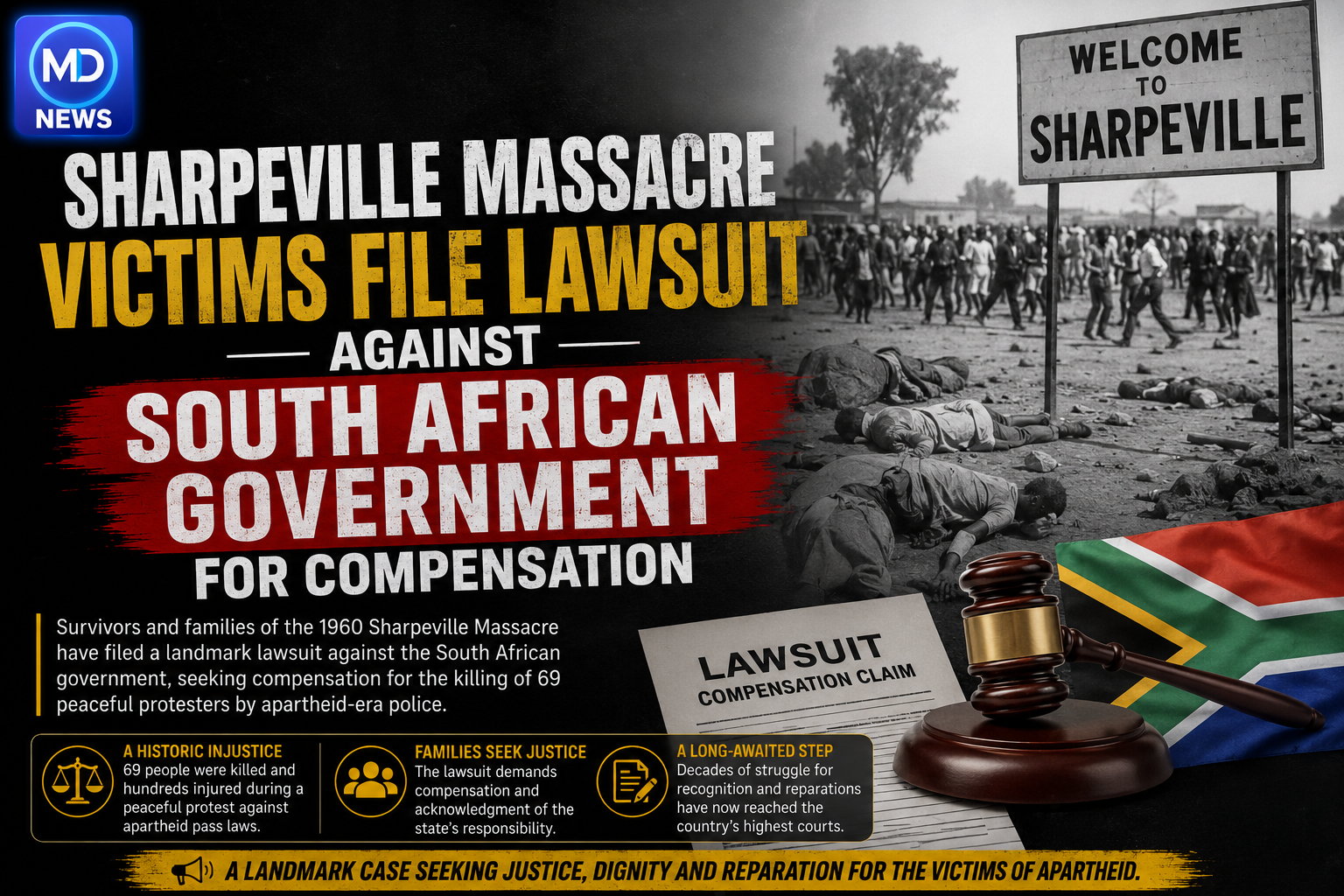
Survivors and relatives of victims of the historic 1960 Sharpeville massacre have filed a legal claim against the South African government demanding financial compensation. The case, submitted on Thursday by three test claimants, challenges an apartheid-era indemnity law that continues to protect the state from liability over the killings.
On March 21, 1960, police opened fire without warning on thousands of Black South Africans gathering peacefully outside a police station in the township of Sharpeville to protest pass laws. The shooting resulted in at least 91 deaths and left 238 people injured. The demonstration was part of a nationwide campaign organized by the Pan Africanist Congress (PAC).
Legal Challenge to Apartheid-Era Law
The lawsuit seeks about 500,000 rand (approximately £23,000) for each claimant and could pave the way for dozens of similar claims if successful. The legal action directly targets a July 1961 law passed by the white minority regime that granted retrospective indemnity to the government and its personnel for actions taken to restore public order. That law remains in effect today, but the claimants' legal team argues that it is unconstitutional.
The South African legal team from the non-governmental organization Lawyers For Human Rights is leading the case, advised by the UK law firm Leigh Day. Officials from South Africa's Department of Justice did not respond to requests for comment regarding the litigation.
Testimonies of the Claimants
Among the three primary claimants is 86-year-old Abraham Mofokeng, who was a 20-year-old factory worker at the time of the shooting. Mofokeng was shot in the back as he fled the police gunfire, leaving a bullet permanently lodged in his spine. Following the conclusion of the Truth and Reconciliation Commission (TRC) in 2003, Mofokeng received a single payment of 30,000 rand, falling short of the TRC's recommended annual reparations of roughly 20,000 rand over six years.
The other two test claimants lost their fathers in the massacre as young children. Paulina Mathinye, now 71, was five years old when her father Samson was killed. Financial hardship forced her to leave school at age 17 to work, preventing her from pursuing her goal of becoming a teacher.
Wider Wave of Apartheid-Era Litigation
The case forms part of broader legal efforts seeking accountability and justice for crimes committed during the apartheid era. In January 2025, a group of 25 survivors and relatives filed a separate lawsuit against the government over its failure to prosecute cases referred by the TRC. Following that action, President Cyril Ramaphosa announced a judicial inquiry into potential political interference, which remains ongoing.
0 YORUMLAR
Bu KONUYA henüz yorum yapılmamış. İlk yorumu sen yaz...