
China's Carbon Emissions Drop Following Gulf Conflict and Electric Vehicle Surge
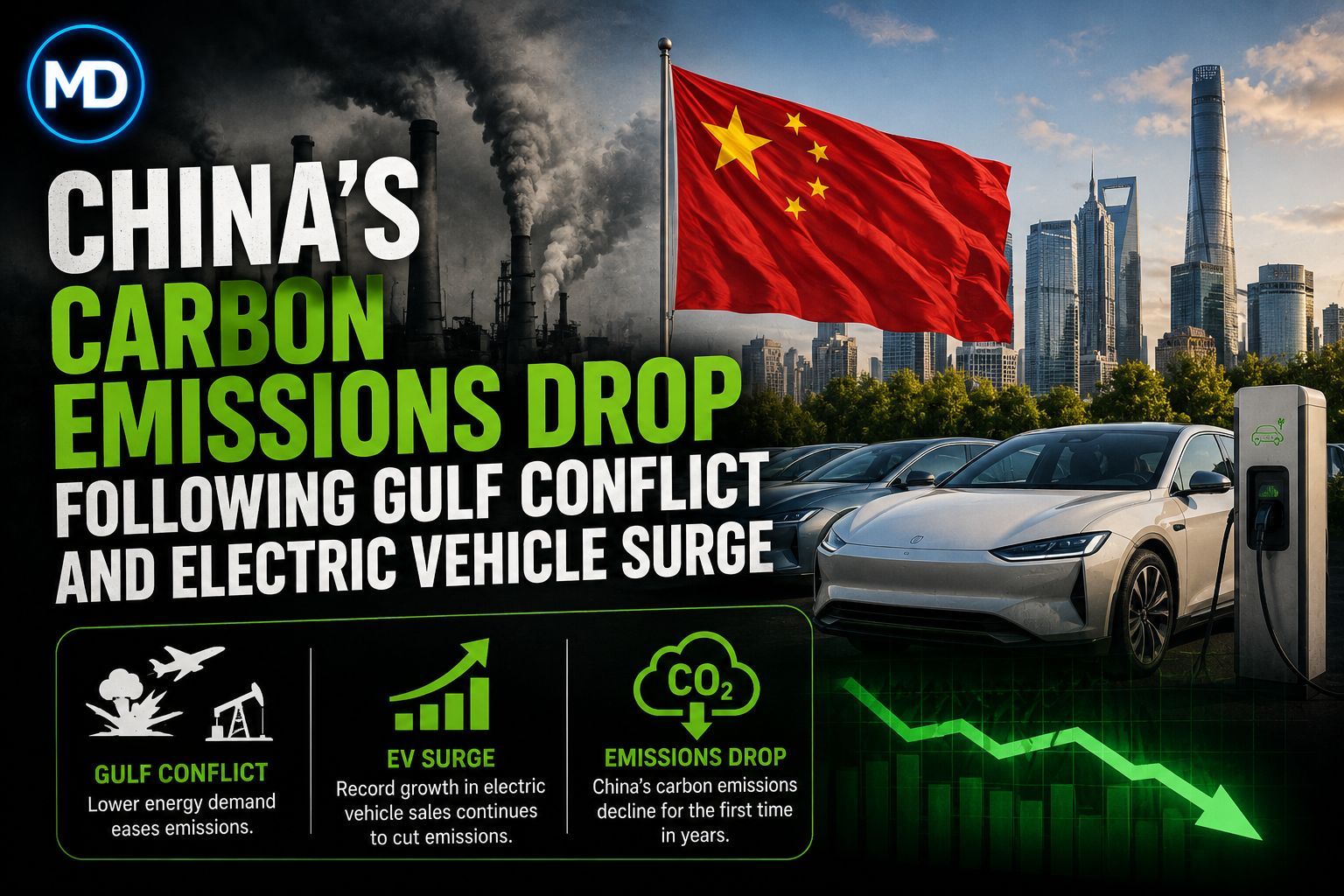
China's carbon dioxide emissions dropped by 1% following the outbreak of conflict between the US, Israel, and Iran, driven by a significant reduction in domestic oil consumption and the rapid adoption of electric transport. According to second-quarter energy data from China's National Bureau of Statistics, analyzed by the Centre for Research on Energy and Clean Air (CREA) for Carbon Brief, the country reduced its oil imports by 32%—equivalent to approximately one million barrels per day—while successfully maintaining an overall increase in transportation usage.
The decline in demand from the world's largest crude importer helped stabilize international oil markets, which had experienced price surges of around 60% following military strikes in late February. Analysis indicates that China managed the import reduction primarily by drawing down its strategic oil stockpiles, which accounted for roughly two-thirds of the drop, while a direct fall in consumer demand covered the remaining third. Overall oil consumption in China fell by 9%, with the transport sector recording a 16% decline.
Accelerated Transition to Electric Mobility
While conventional petrol and diesel vehicles saw reduced usage during the crisis, travel across electric cars, buses, trains, and trucks expanded rapidly. In the first half of 2026, China's shift toward electric mobility offset an amount of oil equivalent to the United Kingdom's total consumption over a six-month period. Industry analysts suggest that a substantial portion of this displaced demand will not return, even if global crude prices eventually decrease.
Lauri Myllyvirta, lead analyst at CREA, noted that this event marks the first time China's total emissions have decreased due to lower oil usage rather than cuts in coal consumption. Myllyvirta highlighted that the shift validates China's long-term energy security strategy, demonstrating that electrification offers effective insulation against external geopolitical and supply shocks in the oil market.
Energy Grid Challenges and Broader Outlook
Despite the fall in oil usage, coal-fired power generation rose during the second quarter. The increase was attributed to shifting economic incentives and delays in modernizing China's electrical grid, which resulted in significant curtailment of available wind and solar power. Nevertheless, climate experts view the overall structural trend as a move away from fossil fuel reliance.
Dr. Muyi Yang, a senior analyst at energy thinktank Ember, stated that the supply disruption in the Strait of Hormuz has reinforced the strategic rationale for reducing reliance on foreign crude imports. Yang noted that managing geopolitical risks tied to oil imports is increasingly difficult for nations, making demand reduction the most viable alternative for long-term security.
0 YORUMLAR
Bu KONUYA henüz yorum yapılmamış. İlk yorumu sen yaz...