US Energy Secretary Defends Venezuela Oil Agreement Against 'Gunpoint Diplomacy' Claims
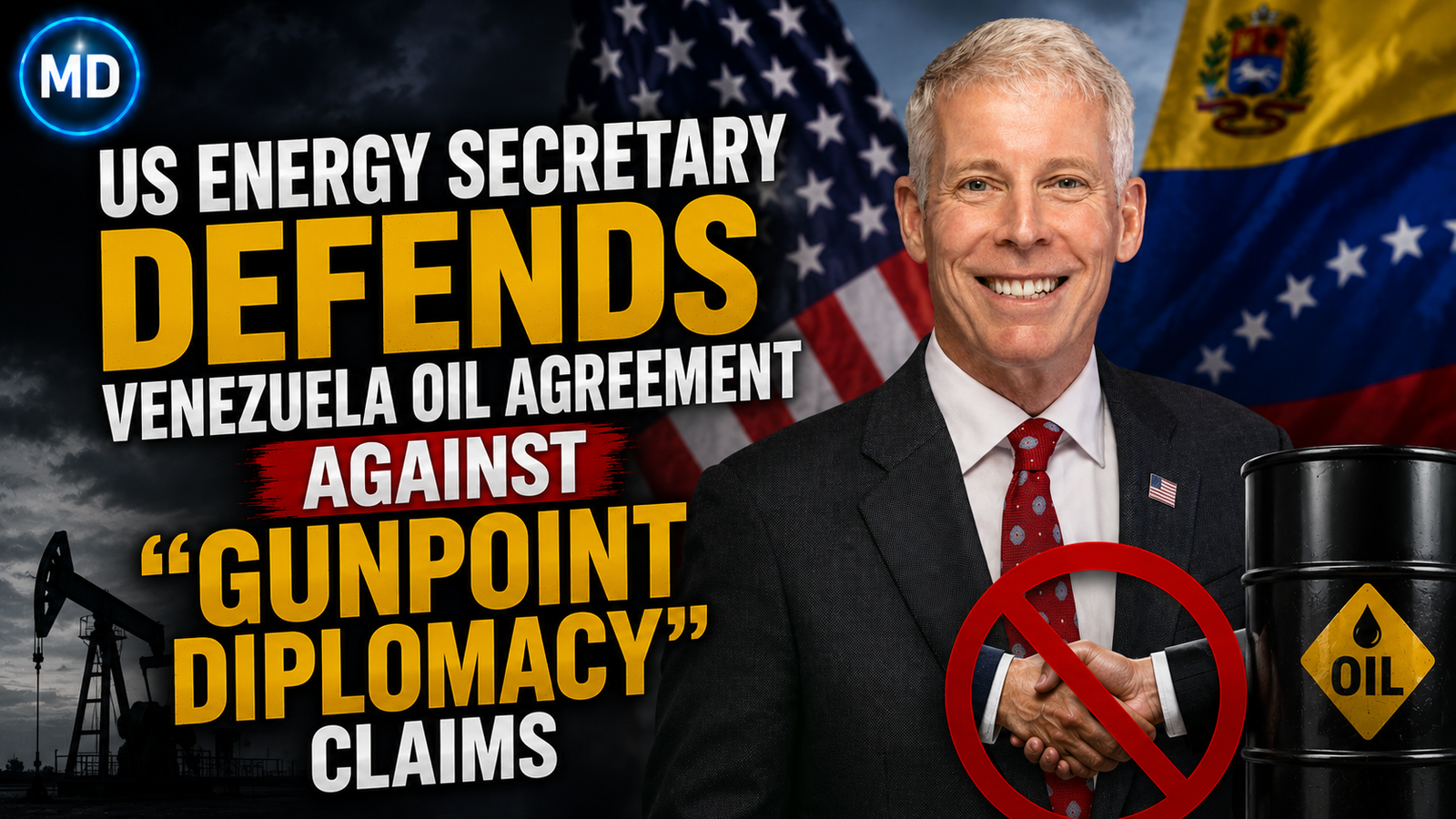
U.S. Energy Secretary Chris Wright has rejected claims that Washington is attempting to seize control of Venezuela's oil reserves, following mounting criticism over an agreement announced by President Donald Trump. Speaking after arriving in Caracas, Wright described the agreement as an "historic transformation" of ties between the two nations and characterized it as part of a strategy to "replace conflict with commerce."
The defense follows Trump's announcement of what he termed "the biggest oil deal in world history," asserting that the arrangement gives the U.S. control over 65 billion barrels of oil. According to the White House, the pact aims to secure American energy dominance for the next century while eliminating Russian and Chinese involvement in Venezuela's energy sector. Venezuela possesses the largest proven oil reserves globally.
CRITICISM MOUNTS OVER INTERIM LEADERSHIP DEAL
The agreement was established with Delcy Rodríguez, who became interim president on January 5. Her appointment occurred two days after President Nicolás Maduro was captured by U.S. special forces during an early morning raid in Caracas. Following Maduro's capture, Trump warned Rodríguez that she could face severe consequences if she failed to comply with U.S. directives. Rodríguez has since made significant concessions to U.S. officials, despite her movement's historical opposition to American influence.
The arrangement has drawn widespread backlash. Economist Francisco Rodríguez described the situation as "gunpoint diplomacy," arguing that no domestic government would accept such terms unless forced under extreme duress. An editorial from The Wall Street Journal similarly criticized the deal, comparing it to state-backed deals with autocrats and pointing to the involvement of Venezuelan businessman Alejandro Betancourt.
REACTION FROM CARACAS AND OPPOSITION
Defending the pact during a national address, Rodríguez stated the agreement offers "endless" benefits and could yield over $209 billion in revenue to fund public healthcare and education. She emphasized that the decision was made with the country's future in mind.
Conversely, members of Venezuela's political opposition have expressed concern that the arrangement undermines hopes for a democratic transition. Opponents fear the financial partnership with Rodríguez's administration reduces incentives for the U.S. to advocate for new presidential elections.
0 YORUMLAR
Bu KONUYA henüz yorum yapılmamış. İlk yorumu sen yaz...