
UN Issues Warning Over 'Supersized' El Niño Threatening Global Severe Weather
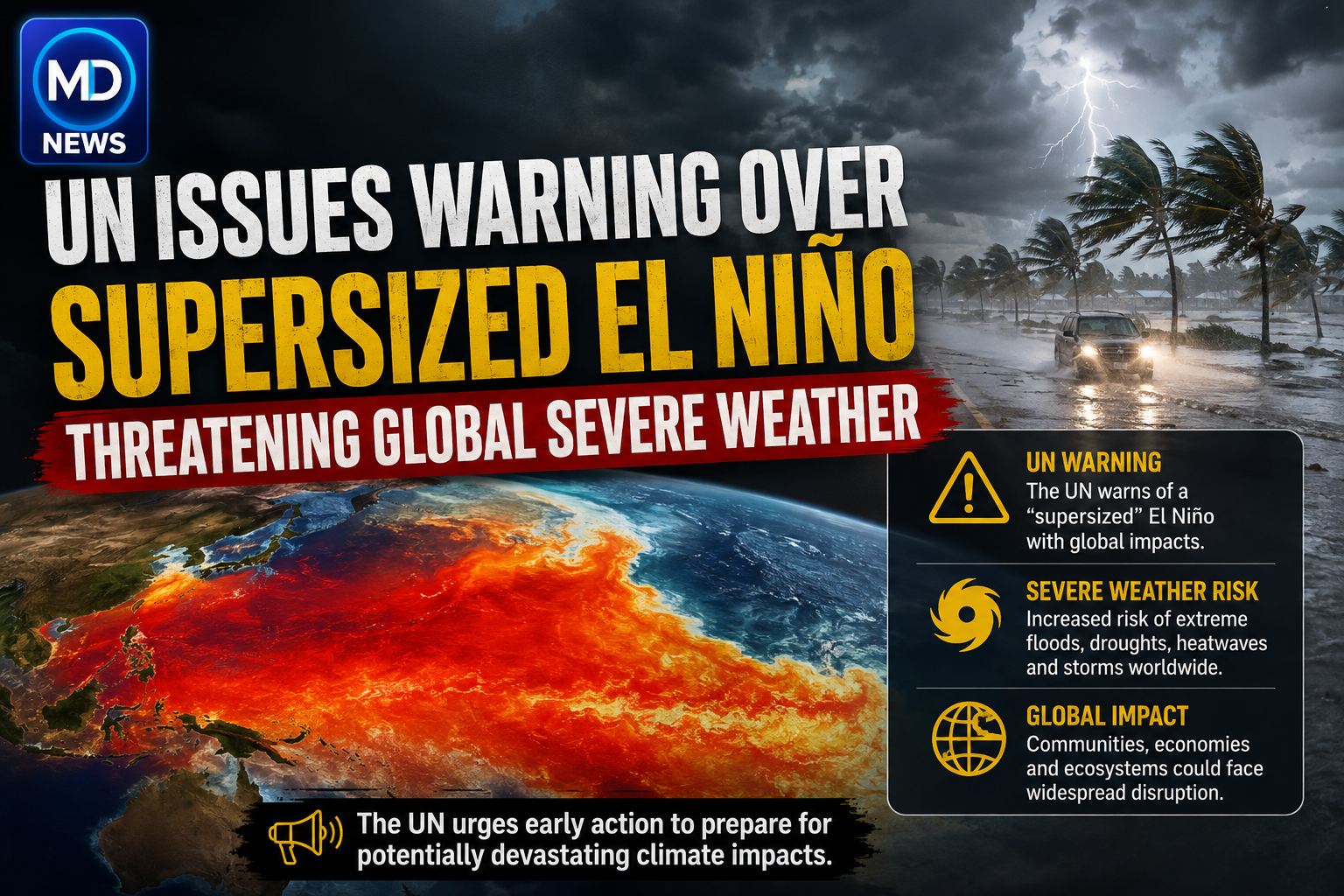
The world has entered a dangerous period of extreme weather as an escalating El Niño phenomenon threatens to become the strongest recorded since at least 1950, United Nations officials have warned. According to data from the World Meteorological Organization (WMO), the natural climate pattern could last until at least February 2027, compounding global temperatures already heightened by human-induced climate change.
UN Secretary-General António Guterres stated that the planet is in uncharted waters as ocean temperatures rise rapidly. The WMO warned that the event could deliver severe disruptions to global communities and economies. In key monitoring areas of the central and eastern tropical Pacific, surface sea temperatures have surpassed 2C above average in recent weeks, with forecasts suggesting monthly sea surface temperatures could reach nearly 4C above average. Sub-surface Pacific temperatures have reportedly exceeded normal levels by more than 8C.
Global Impacts and Regional Disruptions
The WMO expects significant changes in global rainfall patterns over the coming months. Drier conditions are projected across large areas of South East Asia, Central America, and northern South America, escalating the risks of drought and wildfires. In response to anticipated low rainfall, daily vessel transits through the Panama Canal are being reduced by over 10%. Meanwhile, Indonesia is utilizing cloud-seeding aircraft to combat fires that have burned over 107,000 hectares of land during an extended dry season, alongside arresting individuals accused of setting fires for land clearing.
Conversely, increased precipitation and flood risks are forecast for eastern Africa, southern Brazil, and the southern United States. China is preparing for an estimated seven typhoons this year attributed to the climate phenomenon, following deadly storms in July and the evacuation of more than 1 million residents during Typhoon Dolphin in August.
Marine Heatwaves and Preparations
Elevated ocean temperatures are also anticipated across the Indian Ocean, tropical Atlantic, and Australian coastal waters. Australia's science agency noted that while the Great Barrier Reef may avoid the worst of the current conditions, southern Australia faces severe marine heatwaves, heightened risks of harmful algal blooms, and disruptions to marine wildlife. Australian authorities have implemented early warning systems to enable emergency financial relief for fisheries, species relocation, and intensified monitoring.
International agencies and governments are strengthening early warning measures and pre-positioning medical aid to mitigate potential deaths, population displacement, and environmental destruction caused by the event.
0 YORUMLAR
Bu KONUYA henüz yorum yapılmamış. İlk yorumu sen yaz...