
Protests Erupt Across Spain Over Government Response to Ceuta Migrant Crisis
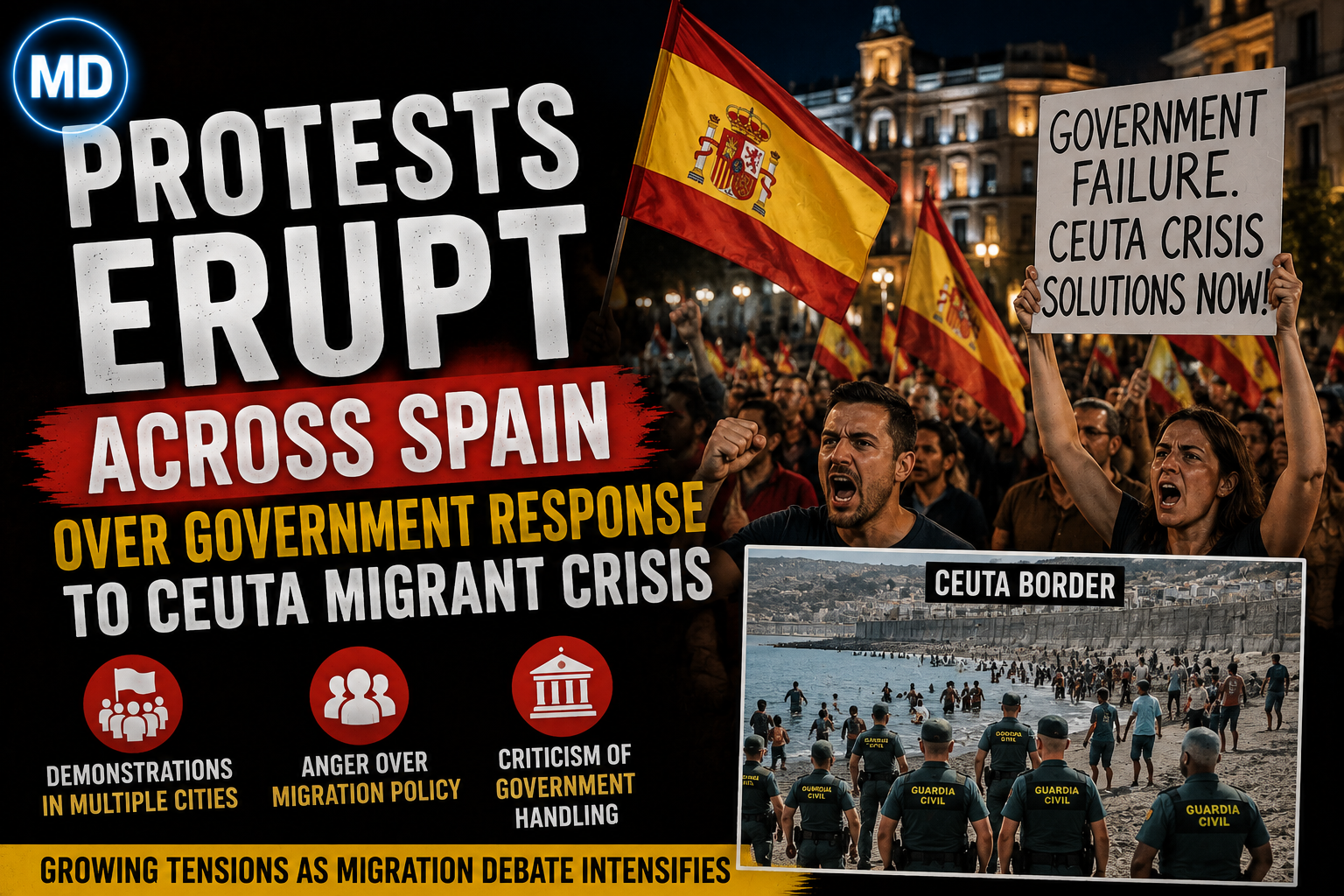
Thousands of demonstrators have taken to the streets in cities across Spain to protest Prime Minister Pedro Sánchez's handling of a massive migrant influx into the North African exclave of Ceuta. The demonstrations follow weeks of heightened tension in the autonomous city after tens of thousands of people crossed the border from Morocco.
Opposition Leaders Lead Mass Rallies
Rallies organized by municipal councils in areas governed or heavily influenced by opposition parties—the conservative Partido Popular (PP) and the far-right Vox party—drew large crowds on Wednesday night. In Madrid, government figures estimated that more than 50,000 people gathered to demand the Prime Minister's resignation.
During the Madrid demonstration, PP leader Alberto Núñez Feijóo claimed that a Spanish city had been invaded with the knowledge of the central government. Vox leader Santiago Abascal criticized Sánchez's foreign policy approach toward the Moroccan regime. Demonstrations also took place in Ceuta, where local residents demanded stronger border protection and called for migrants to be redistributed across Spain or returned to their origin countries.
Scrutiny Over Border Security and Police Findings
An estimated 72,000 migrants entered Ceuta from Morocco on July 30 and 31. While the majority have since returned, up to 5,000 people remain scattered across the enclave's streets, beaches, and makeshift camps. According to figures from Ceuta's mayor, at least 100 people died attempting to swim around the border fence. Local prosecutors have also reported that sexual assaults are occurring almost daily within the city.
Political pressure on the Spanish government has escalated following details from a report submitted by the National Police's National Immigration and Borders Centre (CENIF) to the National Court. The document indicated that Moroccan security personnel demonstrated permissiveness and maintained a significantly smaller presence than usual during the crossings, though the report did not formally accuse Morocco of orchestrating the event.
Prime Minister Sánchez has attributed the mass migration to human traffickers and online misinformation campaigns, while Morocco has denied any involvement or coordination. According to fact-checking platform Maldita, social media posts originating in Morocco encouraged individuals to attempt the border crossing following a Spanish Supreme Court ruling in June.
0 YORUMLAR
Bu KONUYA henüz yorum yapılmamış. İlk yorumu sen yaz...