
New Biography Details Life of Sarah Forbes Bonetta, Queen Victoria's West African Protege
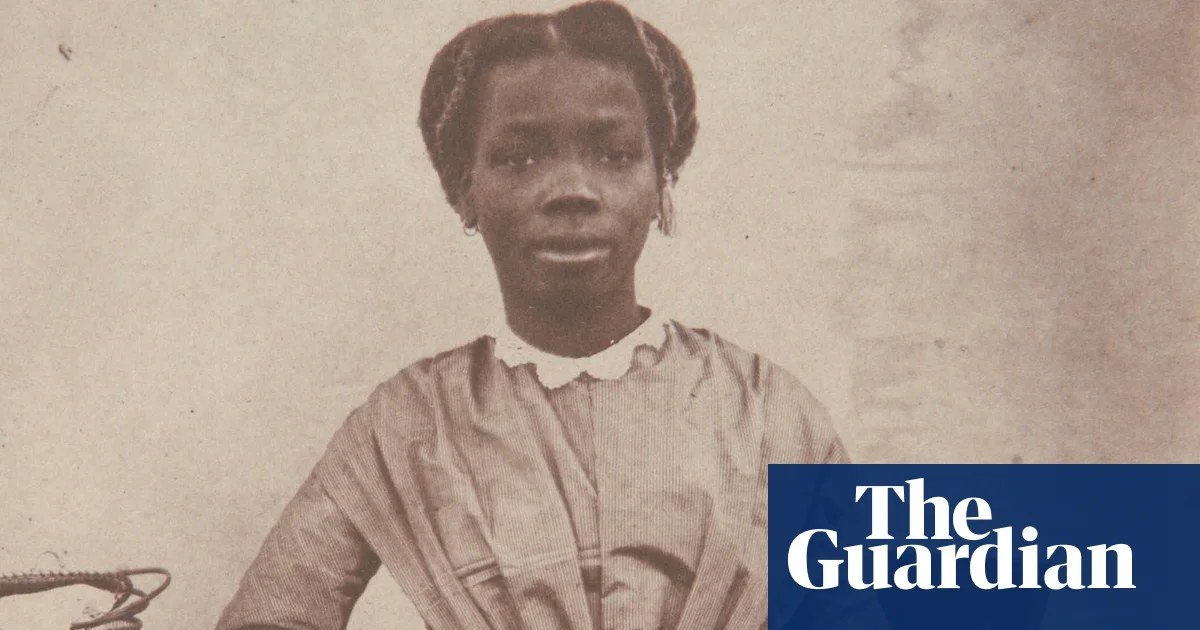
A new biography titled "Becoming Sarah Forbes Bonetta: A Yorùbá Woman in Queen Victoria's Court" by Canadian academic Prof Henry Lovejoy explores the life and imperial legacy of Sarah Forbes Bonetta. Born Àìná in 1843 in Òkè-Òdàn, south-west Nigeria, she was captured as a young girl before being brought to England and presented to Queen Victoria as a diplomatic gift.
Àìná's family was killed in 1848 when her town was attacked by the forces of King Ghezo of Dahomey. Captured by the agodjié, an all-female military regiment, she was held at King Ghezo's court until 1850. During an unsuccessful mission to negotiate an anti-slavery treaty in Dahomey, Frederick Forbes of the Royal Navy's West Africa Squadron requested to take her to England. Forbes gave the seven-year-old child his surname and the name of his ship, the Bonetta.
Indentured Status and Royal Protege Life
According to research by Lovejoy, a professor at the University of Colorado Boulder, Forbes petitioned for Bonetta to become "the property of the crown." Under post-abolition legal frameworks, she was effectively indentured to Queen Victoria until age 19. Lovejoy's research indicates that while Bonetta was educated to become a missionary and featured as a symbol of imperial benevolence, her image was used as iconography to promote British colonialism as a civilising mission.
Queen Victoria paid for Bonetta's education, regularly met with her, and approved her marriage to James Pinson Labulo Davies, a prominent merchant and philanthropist. Bonetta expressed reservations about the marriage, writing that she did not feel love for him. Queen Victoria later served as godmother to the couple's eldest daughter, Victoria, who was educated at Cheltenham Ladies' College with royal assistance.
Descendant and Historical Perspectives
Bayo Randle, a 37-year-old British-Nigerian barrister from London and Bonetta's great-great-grandson, welcomed the research presented in the book. Randle noted the duality of his ancestor's legacy, referencing an 1851 plaster bust sculpted by Benedetto Pistrucci. While the bust preserved her childhood likeness and cultural facial markings, it was created within a phrenological framework that evaluated her as a specimen.
Lovejoy's biography addresses several common misconceptions, clarifying that Bonetta was not a Yoruba princess, was not herself Queen Victoria's goddaughter, and did not spend most of her life in England. Bonetta established herself as a linguist, musician, travel writer, and educator in 19th-century Lagos before dying of tuberculosis in Madeira in 1880 at the age of 37.
0 YORUMLAR
Bu KONUYA henüz yorum yapılmamış. İlk yorumu sen yaz...