
Joshua Wong Pleads Guilty to Foreign Collusion Charge in Hong Kong Court
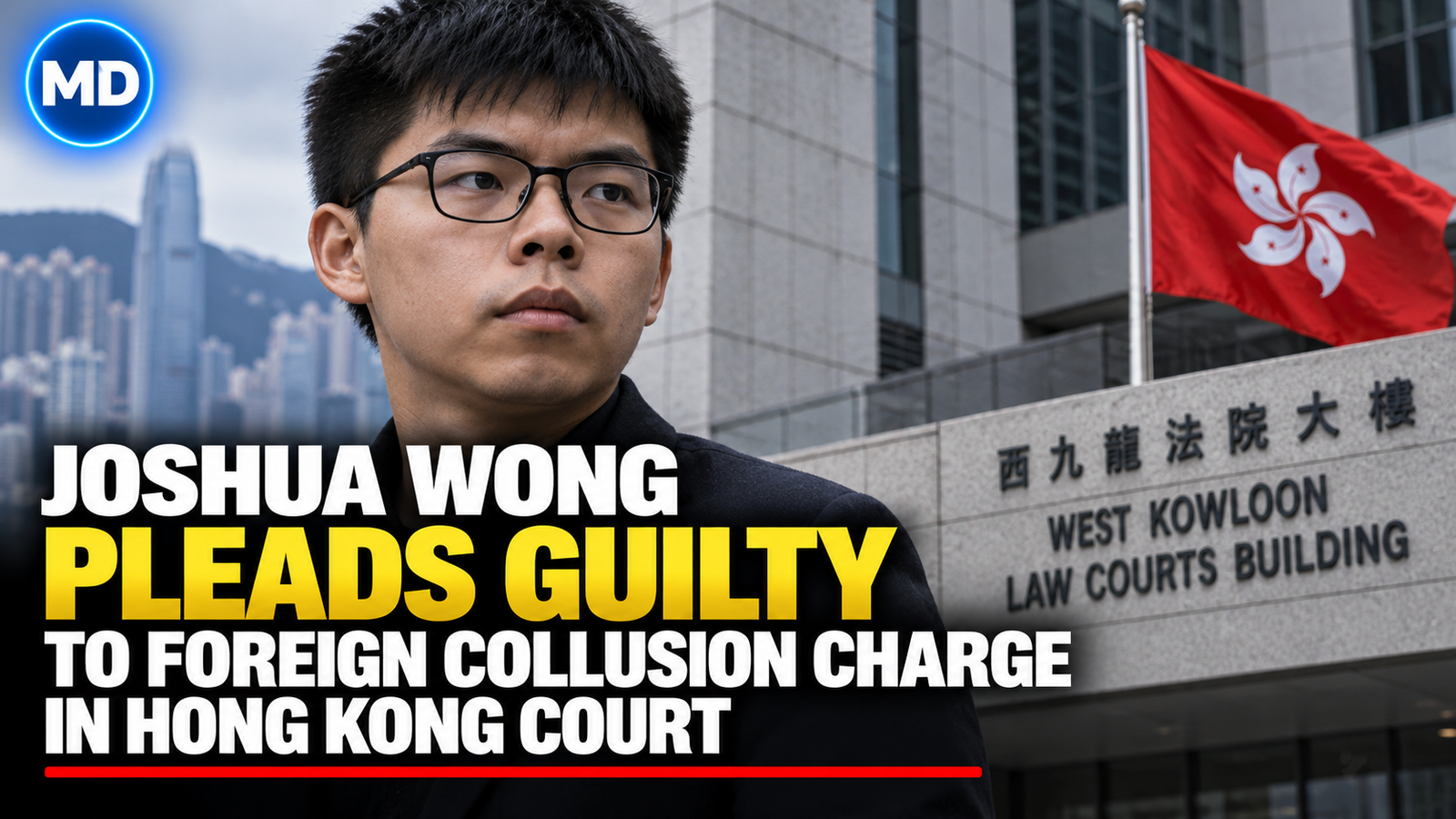
Prominent Hong Kong pro-democracy activist Joshua Wong pleaded guilty on Wednesday to conspiring to seek foreign sanctions against Hong Kong and China. The national security charge carries a maximum penalty of life imprisonment, though pleading guilty typically results in a sentence reduction. The court is expected to sentence him at a later date.
Allegations and Court Proceedings
Prosecutors accused the 29-year-old activist of collaborating with exiled Hong Kong activist Nathan Law to encourage foreign powers to implement sanctions, blockades, or other hostile measures against China. According to prosecution evidence presented in court, Wong traveled abroad, met foreign politicians to lobby for sanctions, and posted details of these meetings on his social media accounts. Authorities stated that he continued to call for sanctions even after Beijing enacted the national security law in 2020.
Wong appeared in court wearing a blue shirt and black-rimmed glasses, standing with his hands behind his back as he entered his plea. A queue formed outside Hong Kong’s High Court overnight as people waited to secure seats for the hearing. Wong is the only activist in the city to face two separate prosecutions under the national security legislation.
Legal History and Background
Wong has been held in continuous detention since November 2020, having spent nearly six years behind bars. In 2022, he pleaded guilty to conspiracy to commit subversion regarding his participation in an unofficial primary election, receiving a four-year-and-eight-month prison sentence in November 2024. Prior to the latest charge, his release had been scheduled for January 2027. Under the national security law, the current offense carries a mandatory three to 10 years in prison, which can increase to life imprisonment if determined to be of a grave nature.
Wong gained international attention during the 2014 Umbrella Movement as a teenage activist leading 79 days of street occupations for democratic reforms, later featuring on the cover of Time magazine. In 2019, he was released from prison during widespread protests against a proposed extradition bill and joined demands for its withdrawal. Beijing subsequently introduced the national security law in 2020, maintaining that it was necessary to re-establish stability in the financial center.
Reactions and International Response
The case has drawn criticism from rights organizations and observers. Supporters and advocates argue that the prosecution relied on Wong's activities prior to the implementation of the national security law, asserting that the law is being applied retroactively. Human rights officials, including Asia Director at Human Rights Watch Elaine Pearson, stated that the repeated charges serve to keep Wong imprisoned and suppress the democracy movement. Former UK Conservative Party leader Iain Duncan Smith called on the British government to address Wong's case directly with Beijing.
0 YORUMLAR
Bu KONUYA henüz yorum yapılmamış. İlk yorumu sen yaz...