
Japan Imposes 30km/h Speed Limit on Narrow Residential Roads
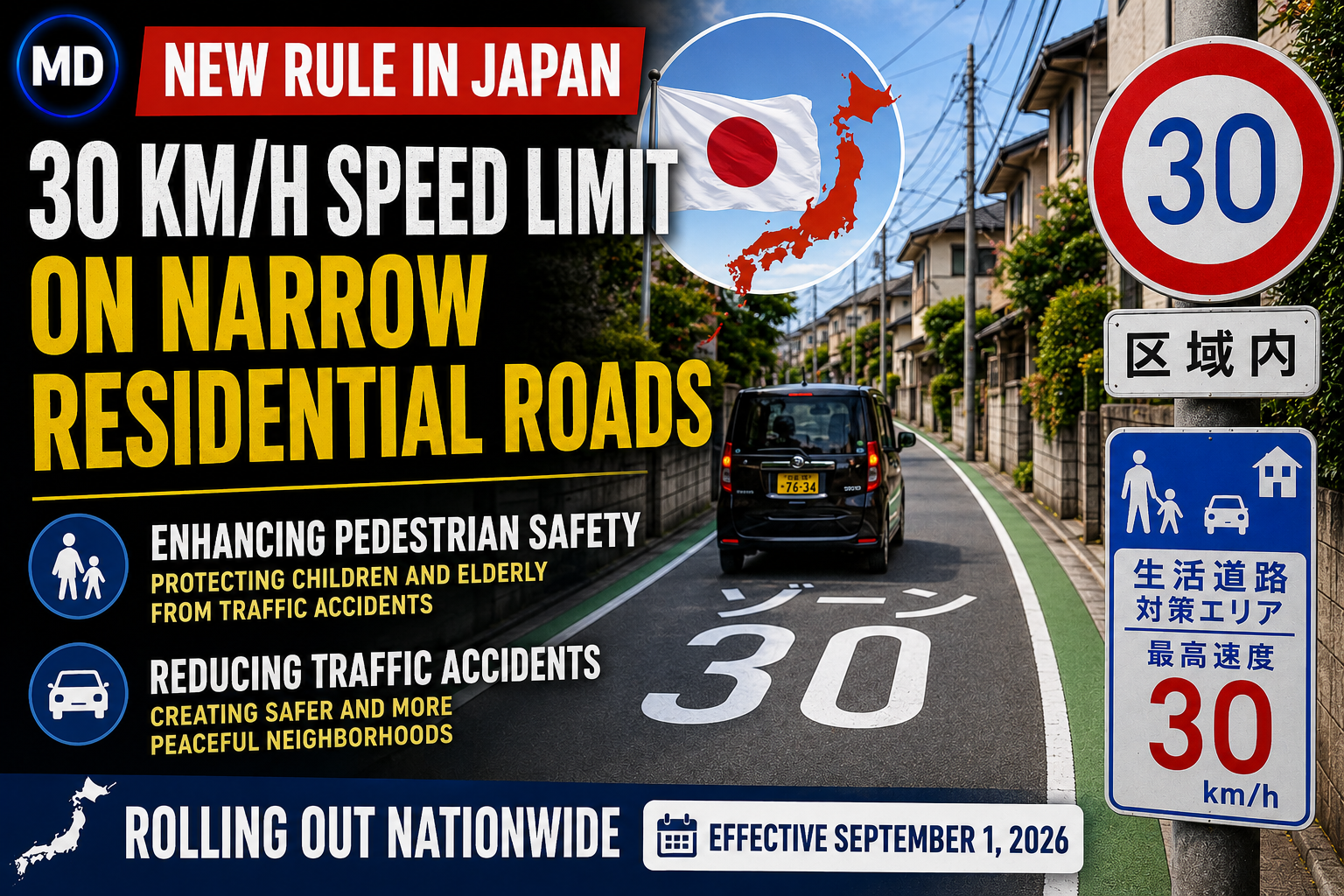
Japan has reduced the speed limit on residential streets from 60km/h (37mph) to 30km/h in an effort to enhance pedestrian safety across crowded urban areas. The updated regulation, which took effect on Tuesday, applies specifically to narrow residential roads that lack a centre line, median strip, or designated speed limit signage.
The revised restriction covers approximately 870,000 kilometres of roadways that are under 5.5 metres wide. According to reports by the Mainichi Shimbun, these narrow passages account for roughly 70% of all general roads across the country. Narrow streets lacking pavements or central dividers are common in Japanese cities, posing elevated risks to cyclists and pedestrians, particularly children and elderly residents.
Addressing Traffic Casualty Trends
The policy shift aims to reduce casualties in neighborhood zones where safety improvements have lagged behind major thoroughfares. While overall annual traffic fatalities in Japan dropped to a record low of 2,457 last year, National Police Agency data reveals that deaths and serious injuries on residential streets involving children and seniors have remained stagnant at around 300 annually since 2021, seeing an increase for the first time in three years in 2025.
Police statistics demonstrate a significant link between vehicle speed and pedestrian survival rates. The mortality rate for pedestrians struck by cars traveling at or below 30km/h is under 1%. That figure climbs to 2.7% for vehicles moving at 30 to 40km/h, and rises sharply to 17.4% when speeds reach 50 to 60km/h. National Police Agency Commissioner General Yoshinobu Kusunoki urged motorists to exercise heightened caution on narrow roads shared simultaneously by drivers, pedestrians, and cyclists.
Precedent for Speed Reductions
The nation-wide policy builds on earlier targeted safety measures. Japan previously introduced designated "zone 30" areas along select school routes and residential streets in 2011. Following that implementation, fatalities and severe injuries on those specific routes dropped by 30%, supporting the broader application of lower speed limits nationwide.
0 YORUMLAR
Bu KONUYA henüz yorum yapılmamış. İlk yorumu sen yaz...