
Guinea-Bissau Voters Approve Constitution Expanding Presidential Powers
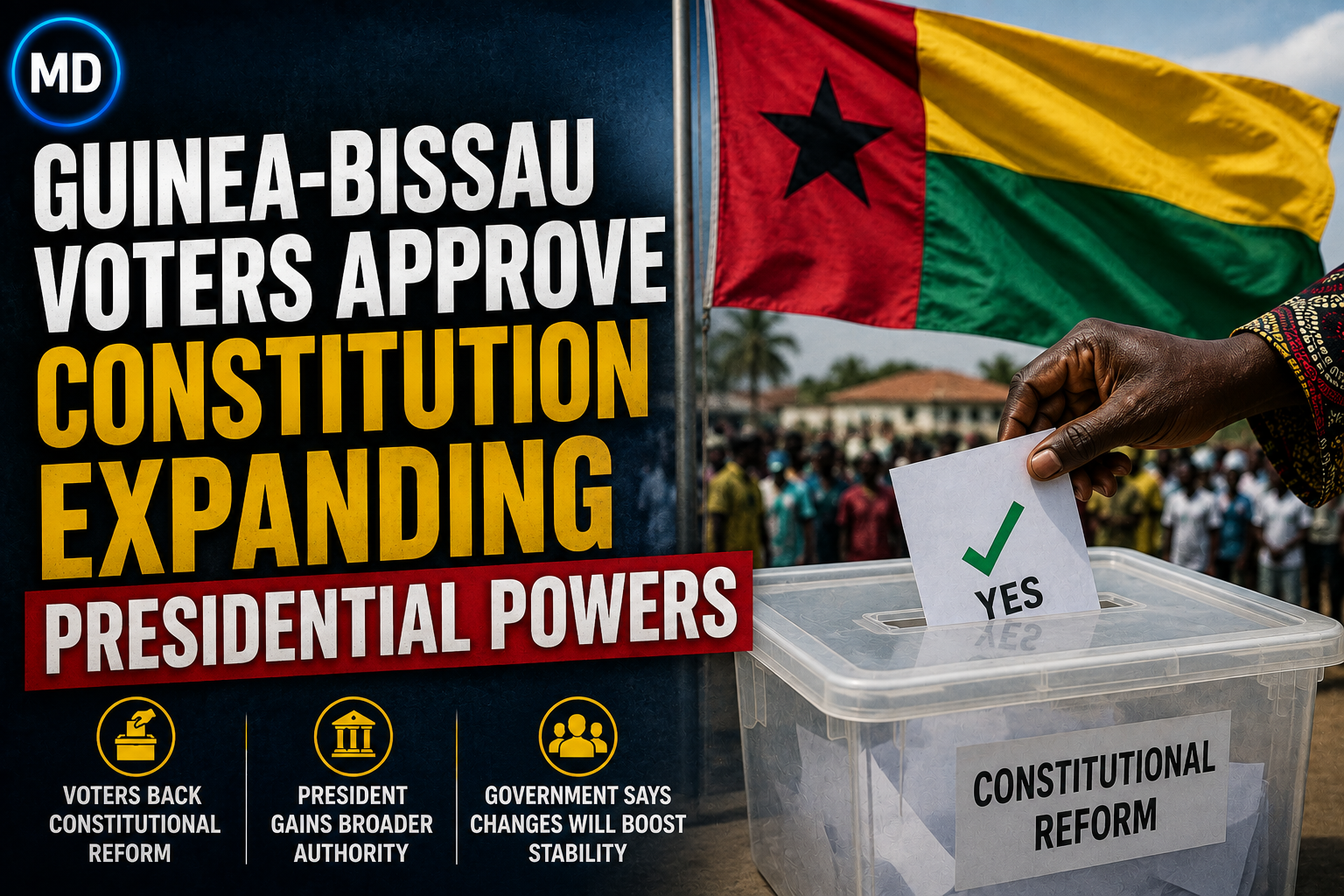
Voters in Guinea-Bissau have approved a new constitution that significantly expands presidential powers, according to provisional referendum results. The vote marks the West African nation's first major constitutional revision since amendments ended a one-party socialist state more than thirty years ago, setting the stage for national elections scheduled for December.
Provisional data indicates that 70% of voters backed the constitutional changes during Sunday's referendum. Voter turnout was reported to be over 55%, representing an estimated 544,060 participants.
Key Reforms and Structural Changes
The newly approved constitution introduces major structural changes to Guinea-Bissau's political system. The total number of parliamentary seats will be reduced from 102 to 65, and the number of electoral constituencies will decrease from 29 to 12.
Additionally, the reform establishes new rules for presidential contenders, requiring candidates to have resided continuously in Guinea-Bissau for at least five years prior to an election. This provision is widely viewed as a measure aimed at diaspora-based politicians who hold substantial followings.
Political Context and Opposition Boycott
Guinea-Bissau has experienced frequent political instability since its independence from Portugal gained international recognition in 1974, recording at least 10 coup attempts, five of which succeeded. The latest military intervention occurred following disputed presidential elections last November, when both major candidates claimed victory amid mutual allegations of electoral fraud. Following the crisis, the military established a transitional ruling council led by Gen Horta Inta-A Na Man, a former military chief of general staff.
Transitional leaders framed the referendum as a necessary step toward long-term governance. Gen Na Man stated that the objective following the vote is to enable whoever wins the upcoming elections to complete their term without interference. Nelson Moreira, the transitional council's second vice-president, noted that the previous 1993 constitution was frequently identified as a source of instability in the country.
However, the referendum faced strong opposition. The African Party for the Independence of Guinea and Cape Verde (PAIGC), the country's main opposition party, was barred from entering a presidential candidate in the upcoming 2025 race and urged its supporters to boycott the vote, labeling it a democratic farce. PAIGC leader Domingos Simões Pereira characterized the August 30 referendum as an extension of the November 26 military coup.
0 YORUMLAR
Bu KONUYA henüz yorum yapılmamış. İlk yorumu sen yaz...