
China Criticizes US 'Threat Narratives' Amid Growing Global AI Rivalry
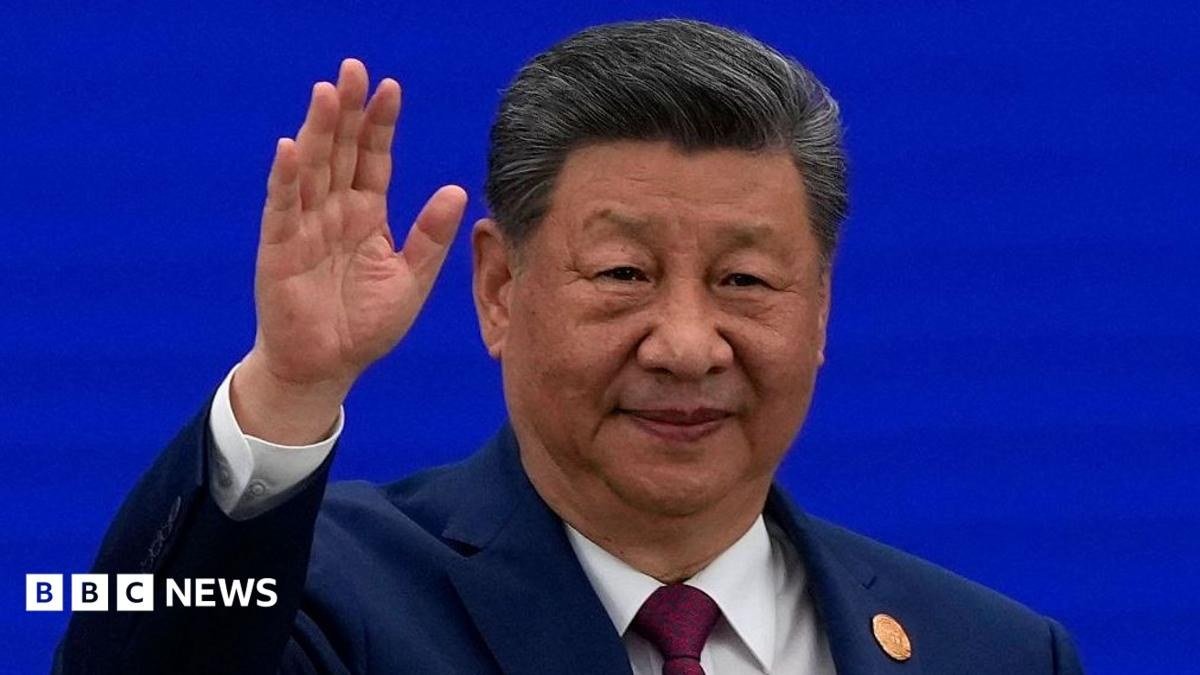
China has strongly criticized what it describes as "threat narratives" surrounding artificial intelligence governance, warning international actors against engaging in confrontation and malicious competition. Chinese foreign ministry spokesperson Guo Jiakun stated on Monday that such narratives disrupt global AI governance and fail to serve anyone's interests, emphasizing that parties should instead collaborate to advance AI in an open, inclusive, and beneficial manner.
The spokesperson's remarks follow recent calls from US AI industry leaders, including Anthropic CEO Dario Amodei, to slow down AI development while preventing China from taking the lead. Concerns within the US AI sector have intensified, with former Anthropic researcher Jacob Coxson warning of severe existential risks if rapid development continues unchecked. AI leaders such as OpenAI Chief Executive Sam Altman and Microsoft CEO Satya Nadella have also advocated for stronger alignment, safety controls, and broader governance mechanisms.
Escalating Technological Competition
Despite safety concerns raised by tech executives, political priorities in the US focus heavily on maintaining a competitive edge. US President Donald Trump highlighted that his primary goal is ensuring the US develops AI faster than China, stating that "whoever wins AI, wins." Meanwhile, Chinese tech innovation continues to advance using open-source models and state backing, despite US export restrictions on critical hardware. Experts note that while the US currently holds a lead in investments, Chinese firms are working rapidly to bridge the gap.
Beijing has also acknowledged the risks inherent in advanced technologies. State security minister Chen Yixin recently emphasized the need to balance development with security, introduce legal and ethical guardrails, and defend against potential foreign intelligence threats using AI. In July, China established the World AI Cooperation Organisation, and Chinese leader Xi Jinping recently proposed creating an open-source AI community during the BRICS summit in India.
Prospects for Governance and Bilateral Talks
Analysts remain skeptical about a formal agreement between Washington and Beijing to slow down development. Chang Jun Yan, an assistant professor at Singapore's S Rajaratnam School of International Studies, noted that cooperation to delay AI progress is highly unlikely due to core national security interests. However, others point out that both nations share an interest in understanding frontier risks and model vulnerabilities.
Efforts are underway to place AI on the diplomatic agenda. Reports indicate that both sides are attempting to include the topic in discussions during an upcoming summit where President Trump is set to host President Xi at the White House next week, alongside preliminary talks between US Treasury Secretary Scott Bessent and Chinese Vice-Premier He Lifeng.
0 YORUMLAR
Bu KONUYA henüz yorum yapılmamış. İlk yorumu sen yaz...