
At Least 68 Dead in Central Spain High-Speed Train Collision
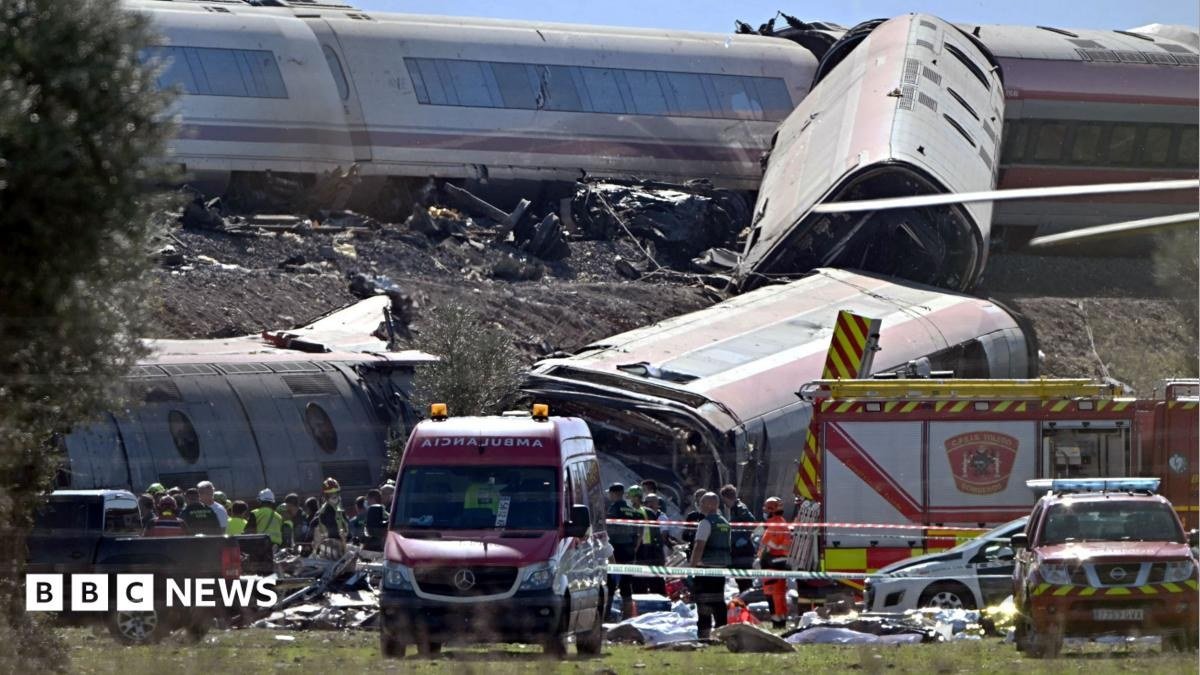
A severe high-speed train collision in central Spain has left at least 68 people dead and dozens more injured, marking one of the country's worst rail disasters in recent history. The crash took place on Wednesday morning between the municipalities of Mora and Orgaz, roughly 140 kilometers (87 miles) south of Madrid, on a line connecting the capital to Seville.
The incident occurred just after 09:00 (08:00 GMT) when a train operated by the state-owned railway company Renfe, carrying 397 passengers, struck the rear of a stationary train operated by private operator Iryo, which had 147 passengers on board. The force of the impact derailed several carriages, causing some to fall down an embankment and one carriage to catch fire. Images from the scene showed rail track penetrating one of the carriages, while emergency services deployed dozens of ambulances and a helicopter to transport the critically injured.
Investigation Points to System Failure and Manual Error
According to Spain's Transport Minister Óscar Puente, the stationary Iryo train had come to a halt due to a technical computer failure. Operational protocol dictates that a 24-hour control center in Madrid assumes management during system failures. Puente stated that control room staff made an unexplained directive permitting the trains to resume movement without imposing speed limits, citing a combination of computer failure and human error as the cause.
Survivors reported intense impact forces that threw passengers across carriages, scattered luggage, and trapped individuals under debris and seats. Many passengers resorted to breaking carriage windows to escape the filled and damaged cars. Due to the severity of the crash, the Civil Guard indicated that DNA samples from relatives would be required to identify certain victims.
Political Reactions and Safety Demands
Visiting the crash site, Prime Minister Pedro Sánchez expressed national grief and promised a thorough investigation to identify any negligence or systemic safety shortcomings. Political leaders across the spectrum suspended public engagements and campaign activities for upcoming parliamentary elections.
The disaster has drawn sharp criticism from opposition figures and labor representatives. Alberto Núñez Feijóo, leader of the opposition People's Party, demanded full transparency regarding national rail infrastructure, while the CSIF trade union called for the transport minister's resignation, alleging that the ministry was deflecting accountability onto control center personnel. This event marks Spain's deadliest train crash since a 2013 derailment near Santiago de Compostela killed 80 people, and follows another deadly rail incident near Córdoba in January that claimed 46 lives on the same line.
0 YORUMLAR
Bu KONUYA henüz yorum yapılmamış. İlk yorumu sen yaz...