
Prosecutor Warns of Daily Sexual Assaults in Ceuta Amid Ongoing Migrant Crisis
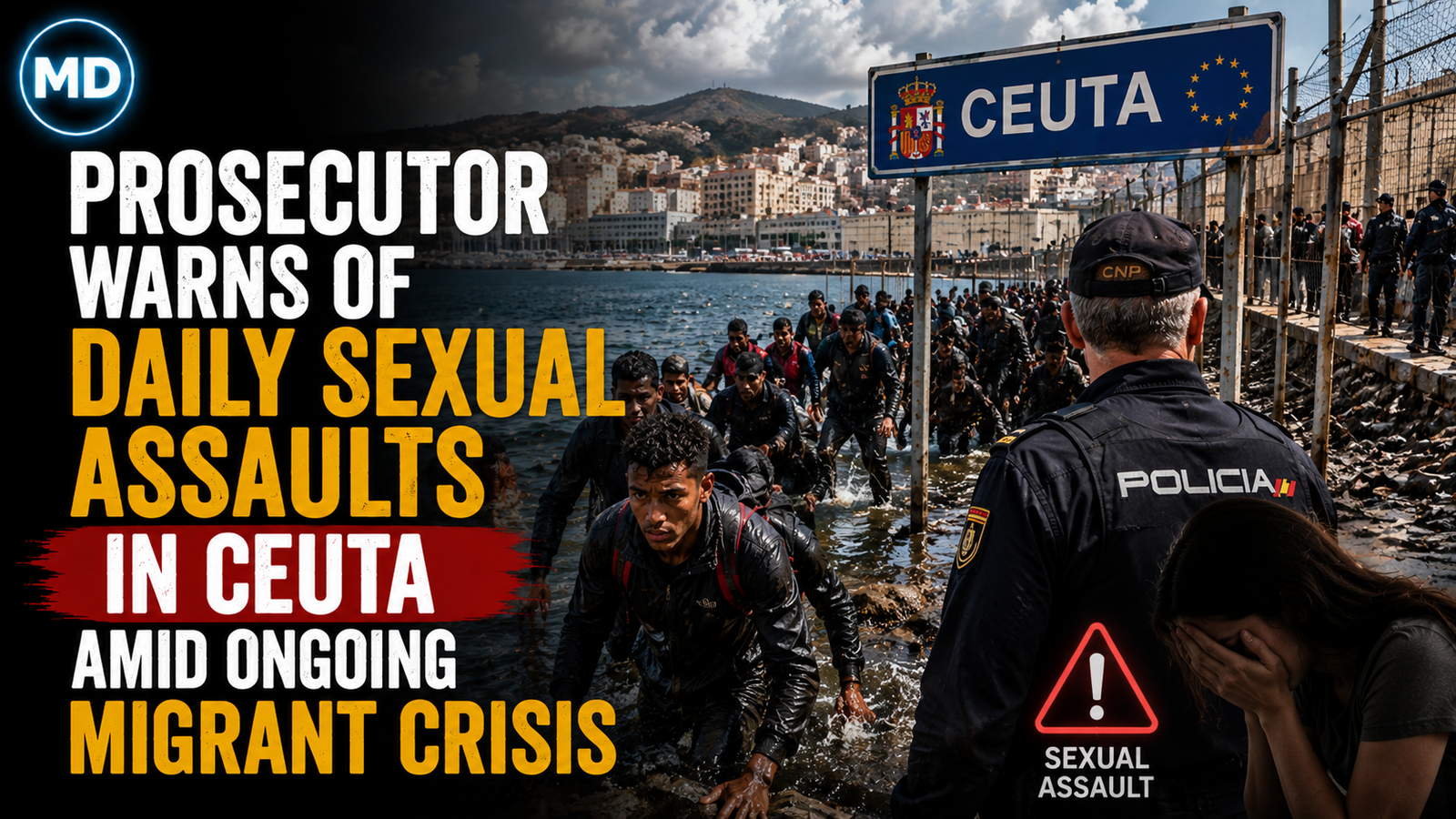
Spanish prosecutors report that 23 sexual assaults, including nine involving children, have been recorded in the Spanish exclave of Ceuta following a mass influx of migrants at the end of July. Ceuta's chief prosecutor, Silvia Rojas, stated that the figures represent nearly one assault every day, emphasizing that migrant girls are particularly vulnerable due to their irregular status in the territory.
An estimated 5,000 migrants remain in Ceuta out of at least 72,000 who crossed from Morocco on July 30 and 31. Rojas estimated that between 1,400 and 1,600 of those remaining are children. The prosecutor noted an exponential increase in sexual violence linked to the influx, adding that many victims refrain from reporting crimes out of fear or due to their current circumstances in the city. Suspected attackers identified so far include four Moroccans, three Spaniards, and a Belgian, according to news agency Efe. The Spanish Society of Epidemiology stated that the situation highlights existing difficulties in detecting and addressing violence against migrant women and girls.
Tensions and Political Response
The crisis has triggered rising unrest and violence between migrants and local residents. In response, Spanish Prime Minister Pedro Sánchez convened his national security council for the second time in a week. Meanwhile, Economy Minister Carlos Cuerpo announced that the cabinet approved a multi-million euro aid package to support essential services and the care of unaccompanied minors.
Local leaders and business representatives have voiced frustration over the lack of a clear resolution. Arantxa Campos, president of the Ceuta Employers' Confederation, expressed concern over the absence of a government plan and screening timeline. Ceuta Mayor Juan Jesús Vivas called on Spaniards to join demonstrations across mainland Spain in support of the territory on Wednesday, coinciding with its annual holiday. The mayor also noted that at least 100 people died attempting to swim around the border fence during the crossing attempt.
Diplomatic Strains and Political Debate
The political handling of the situation has drawn sharp criticism from opposition parties. The hard-right Vox party accused Sánchez of surrendering control of Ceuta, while the opposition People's Party spokesperson Borja Sémper questioned how tens of thousands of people could reach the border without Moroccan knowledge. Morocco has denied any orchestration or involvement in the crossings.
Sánchez stated that no intelligence reports indicate involvement by Moroccan authorities. Instead, he attributed the escalation to online disinformation linked to Russia, Israel, and international far-right movements aimed at polarising Europe. Government spokeswoman Elma Saiz confirmed evidence of digital forums amplifying the crisis. Both Russia and Israel have denied the claims, with Israeli Foreign Minister Gideon Sa'ar calling the statements a lie and Russia demanding evidence. Fact-checking site Maldita reported that social media posts encouraging crossings circulated in Morocco prior to the influx following a June Spanish Supreme Court ruling.
To assert Spanish authority, Sánchez announced that King Felipe VI would visit Ceuta when conditions permit. Morocco maintains a long-standing territorial claim over Ceuta and Melilla, and a previous royal visit in 2007 led Rabat to recall its ambassador from Madrid.
0 YORUMLAR
Bu KONUYA henüz yorum yapılmamış. İlk yorumu sen yaz...