
Nepal Flash Floods Leave Over 1,000 Dead as Rescuers Race to Reach Trapped Tunnel Workers
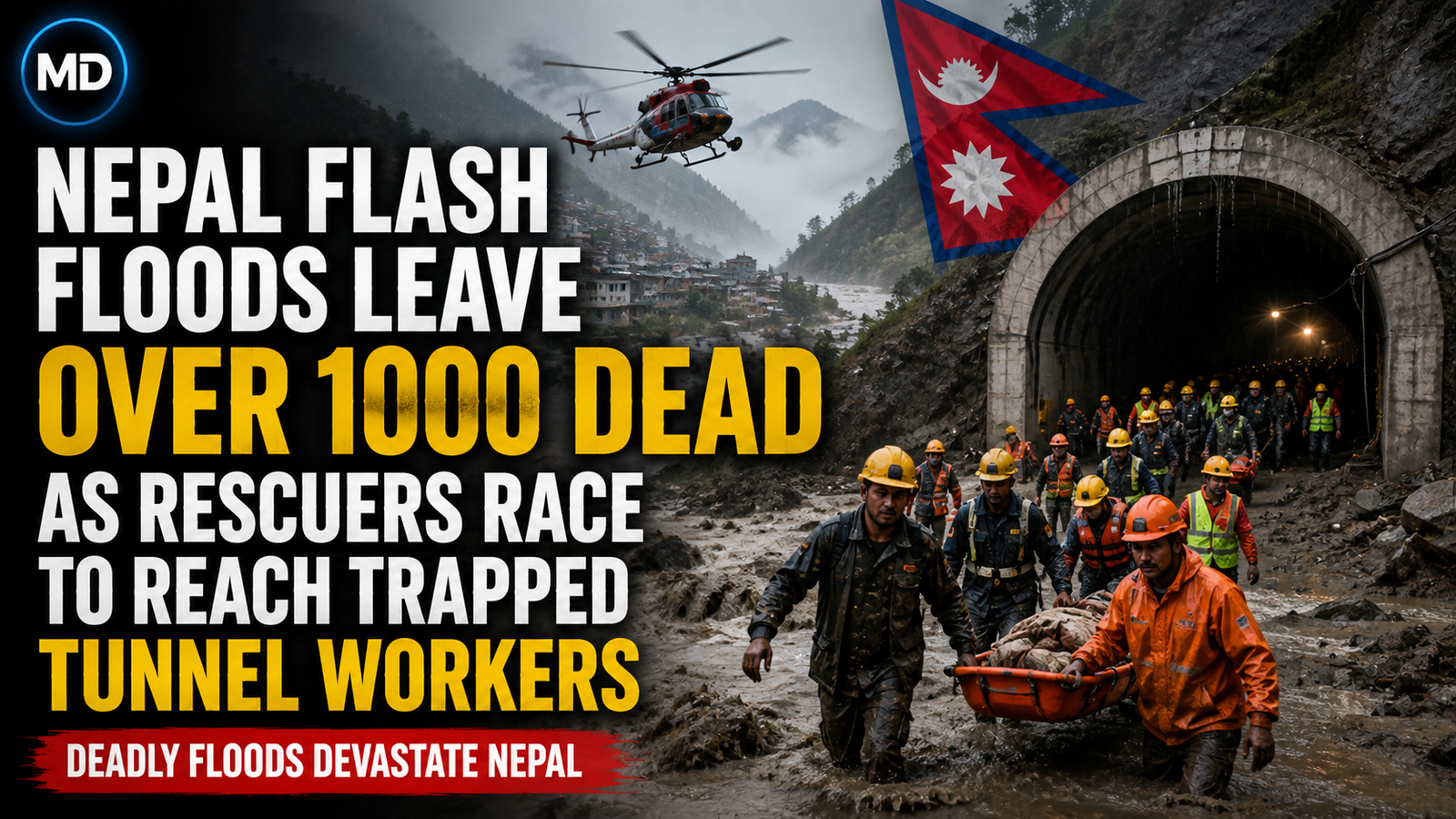
More than 1,000 people have died and approximately 4,000 remain missing following devastating flash floods in Nepal last week, according to officials. Rescue operations are currently focused on a network of underground tunnels at hydroelectric construction sites along the Trishuli River, where hundreds of laborers may be trapped.
Survivors working on the Upper Trishuli 3B Hydropower Project described the moment river water burst into their work area. Pemba Dundu Tamang, a construction worker on a team lining the tunnels with concrete, reported that a sudden, powerful blast of air and flying debris preceded the deluge. Tamang said he fled uphill for roughly 20 minutes as floodwaters surged through the tunnel, estimating that 50 to 60 workers escaped alongside him. After taking refuge in the village of Shanti Bazar for two days, he was evacuated by military personnel.
The Nepal Army confirmed that search-and-rescue teams are actively pumping air into flooded tunnel systems to reach potential survivors. Army spokesman Raja Ram Basnet stated that soldiers are also recovering bodies and working to prevent disease outbreaks, noting that 119 people were rescued on Tuesday. Specialists and rescue crews from Nepal, China, and India are utilizing excavators and heavy machinery to clear debris from affected sites.
Heavy Human Toll and Infrastructure Impact
The disaster has severely impacted local communities along the riverbanks, sweeping away homes and infrastructure. Tamang lost six family members, including his mother, brother, sister-in-law, and three nieces and nephews, when floodwaters destroyed his home. His colleague, Itha Ghale, reported losing eight relatives, including his mother and eldest daughter.
Hydropower accounts for over 99 percent of Nepal's electricity generation. The Upper Trishuli 3B facility, which was scheduled to open next year to process upstream water for the national grid, is among several damaged projects, raising concerns over future employment and energy supply for affected workers.
Early Warning Systems Under Scrutiny
A report released by experts from the Asian Mountain Academic Alliance, the Stimson Centre, and China's Institute of Mountain Hazards and Environment indicates that satellite imagery showed signs of glacial instability in the days preceding the disaster. Observed indicators included accelerated surface movement of the glacier, discoloration of meltwater, and rock fractures.
While researchers noted that the initial avalanche moved too rapidly for immediate warnings near the impact zone, they concluded that an effective early warning system could have alerted populations further downstream, where floodwaters took 10 minutes or longer to arrive.
0 YORUMLAR
Bu KONUYA henüz yorum yapılmamış. İlk yorumu sen yaz...