
Jury Deadlocked in Murder Trial of Massachusetts Mother Lindsay Clancy
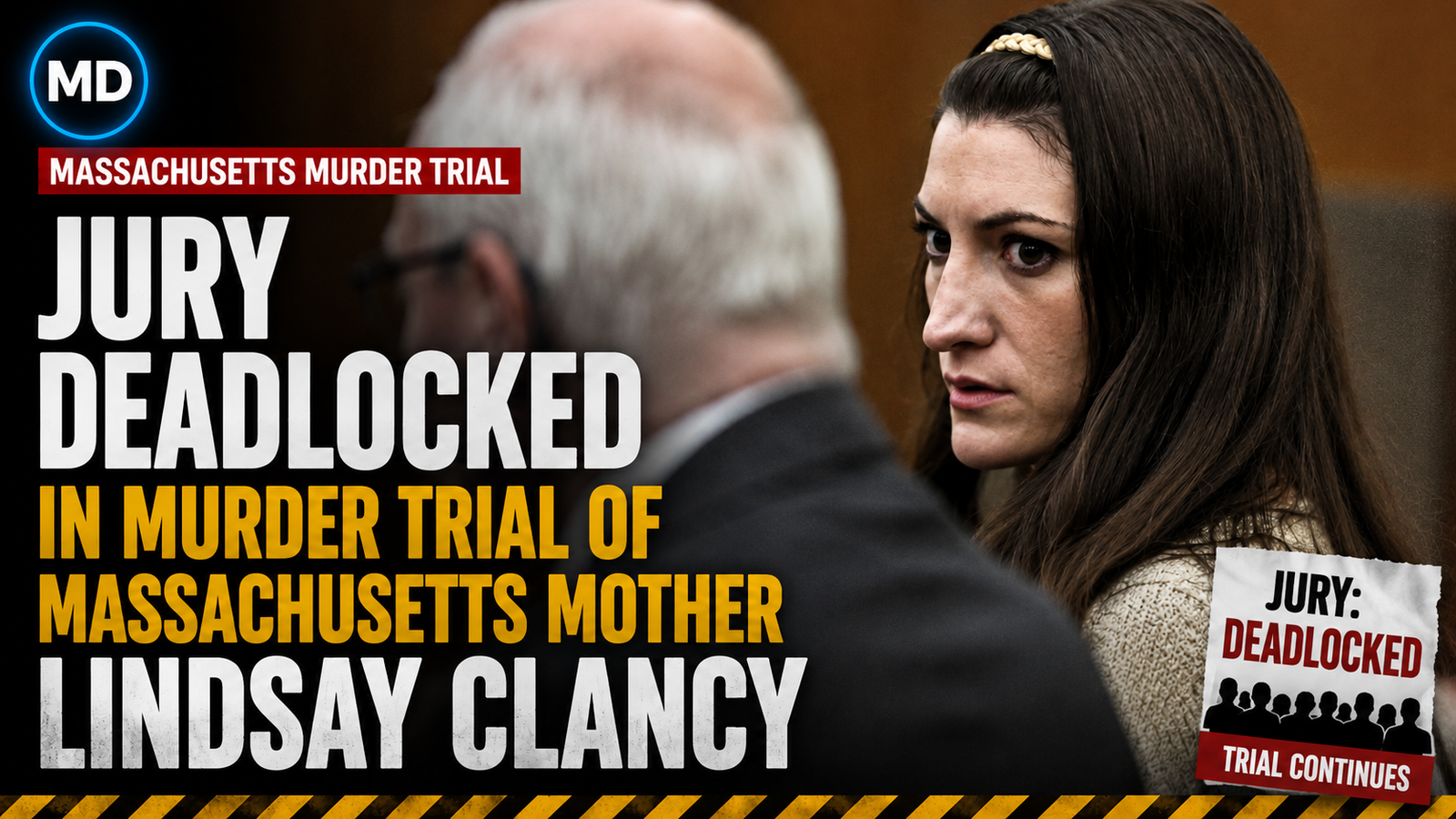
Jurors in the murder trial of Lindsay Clancy remain deadlocked following four days of deliberations, prompting the presiding judge to instruct them to continue their efforts to reach a verdict. The 36-year-old former nurse from Massachusetts is charged with three counts of first-degree murder in connection with the 2023 deaths of her three young children at their family home.
On Tuesday, Judge William Sullivan read a note in court indicating that the panel of nine women and three men was unable to agree on a decision, drawing audible gasps in the courtroom. Following several additional hours of discussion after the note was read, the judge sent the jurors home for the evening and instructed them to resume deliberations the following morning, thanking them for their commitment to the case. Clancy, who uses a wheelchair due to paralysis sustained when she jumped from a second-floor window shortly after the incident, was present alongside her attorney.
Core Allegations and Legal Arguments
Prosecutors allege that Clancy made a calculated and deliberate decision to kill her children—five-year-old Cora, three-year-old Dawson, and eight-month-old Callan—by strangling them with fitness bands in January 2023. The defence does not dispute that Clancy caused the deaths, but contends she was suffering from postpartum psychosis, a severe mental health condition, and experienced a command hallucination that rendered her unable to distinguish right from wrong at the time.
The deadlock follows weeks of testimony from dozens of witnesses. Legal experts noted that such impasses are common in complex, highly publicised, and emotionally heavy cases. If the jury remains unable to reach a unanimous decision, the judge may issue a specific instruction—known in Massachusetts as a Tuey-Rodriguez charge—to encourage further deliberation, or ultimately declare a mistrial.
Potential Verdicts and Sentencing
A conviction on first-degree murder carries a mandatory sentence of life imprisonment without the possibility of parole. Jurors also have the option to convict Clancy on lesser charges, such as second-degree murder or manslaughter, both of which carry prison sentences. Alternatively, if she is found not guilty by reason of lack of criminal responsibility due to insanity, Clancy would be committed to a psychiatric hospital with periodic reviews, where she could potentially remain for the rest of her life.
0 YORUMLAR
Bu KONUYA henüz yorum yapılmamış. İlk yorumu sen yaz...