
Donald Trump Names Hardliner Stephen Miller as White House Chief of Staff
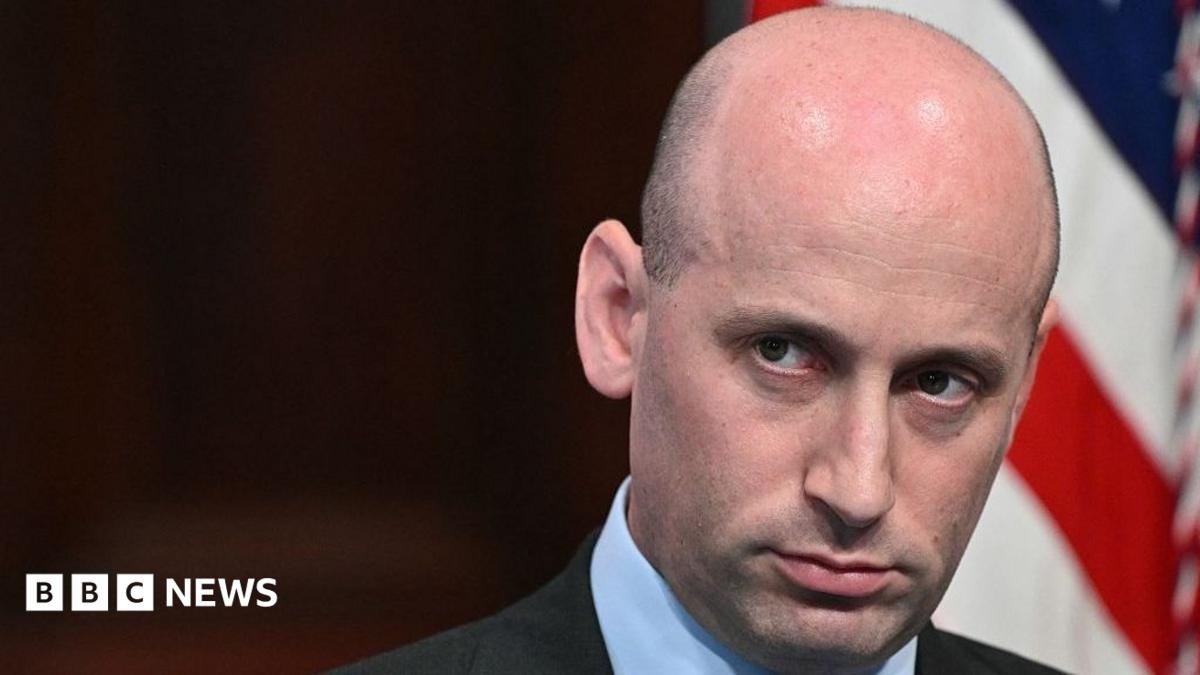
U.S. President Donald Trump has named his longtime political adviser and partisan strategist Stephen Miller as the new White House chief of staff. Announced on Friday via Trump's Truth Social platform, the appointment comes shortly after significant Republican losses in Tuesday's midterm elections. Miller replaces Susie Wiles, who co-managed Trump's 2024 campaign and served as chief of staff during a period of relative organizational stability.
Addressing reporters after the announcement, Trump stated that Miller has been with him "since the beginning" and that the appointment was made "to make a change." Following the announcement, Miller posted on X that he was "honored beyond words" and characterized his upcoming mission as a fight to support the president and defend the nation.
SHIFT FROM WILES TO MILLER
The leadership change marks a significant shift in the White House front office. Wiles had earned a reputation for professional management, steering clear of the frequent staffing shake-ups that marked Trump's first term. However, reports indicated that Trump grew dissatisfied with Wiles as his political standing declined ahead of the midterm results. The president was also reportedly frustrated by reports of individuals connected to Wiles securing lucrative consulting roles through their White House ties.
Miller, who served as deputy chief of staff for policy in Trump's second term, has been a key strategist for Trump since joining his 2016 campaign. He remained a loyal aide through the end of Trump's first presidency and during his time out of office following the 2020 election.
IMMIGRATION POLICIES AND CONTROVERSIES
Miller is best known as the primary architect of the administration's aggressive immigration enforcement measures, which included increasing funding for federal enforcement actions nationwide. He previously faced public scrutiny after labeling Alex Pretti—who was shot and killed by federal agents during a Minneapolis deportation operation—a "domestic terrorist" and an "assassin," though Miller later retracted those statements by noting agents "may not have been following" proper protocol. Additionally, Miller played a prominent role in U.S. military operations in Venezuela and anti-drug trafficking campaigns in the Caribbean and eastern Pacific, which drew criticism from opponents.
CONGRESSIONAL REACTION AND POLITICAL OUTLOOK
The elevation of Miller to the chief of staff position—a role responsible for managing presidential access, legislative agendas, and congressional negotiations—has drawn starkly divided reactions across Washington. Democratic House Leader Hakeem Jeffries sharply criticized the appointment on social media, describing Miller as an extremist. Miller will also face legislative negotiations with a Democratic Senate caucus that includes newly elected Texas Senator James Talarico, with whom Miller previously engaged in a public social media dispute.
Reactions among Republicans are split. Retiring North Carolina Senator Thom Tillis previously criticized Miller as "incompetent" and responsible for poor policy proposals. Conversely, Utah Senator Mike Lee praised Miller on X, calling him a "staunch defender of law and order" and a dedicated conservative.
The appointment follows polling indicating that 58% of voters felt the administration's immigration actions had gone too far, alongside a notable shift in Hispanic voter support away from Republicans during the midterms. While Vice President JD Vance suggested after the midterms that enforcement focus could shift toward businesses hiring undocumented labor, Miller's promotion signals a continuation of hardline White House policies as congressional Democrats prepare for heightened oversight.
0 YORUMLAR
Bu KONUYA henüz yorum yapılmamış. İlk yorumu sen yaz...