
Persistent Illegal Gold Mining Drives Environmental and Social Strain in South Africa
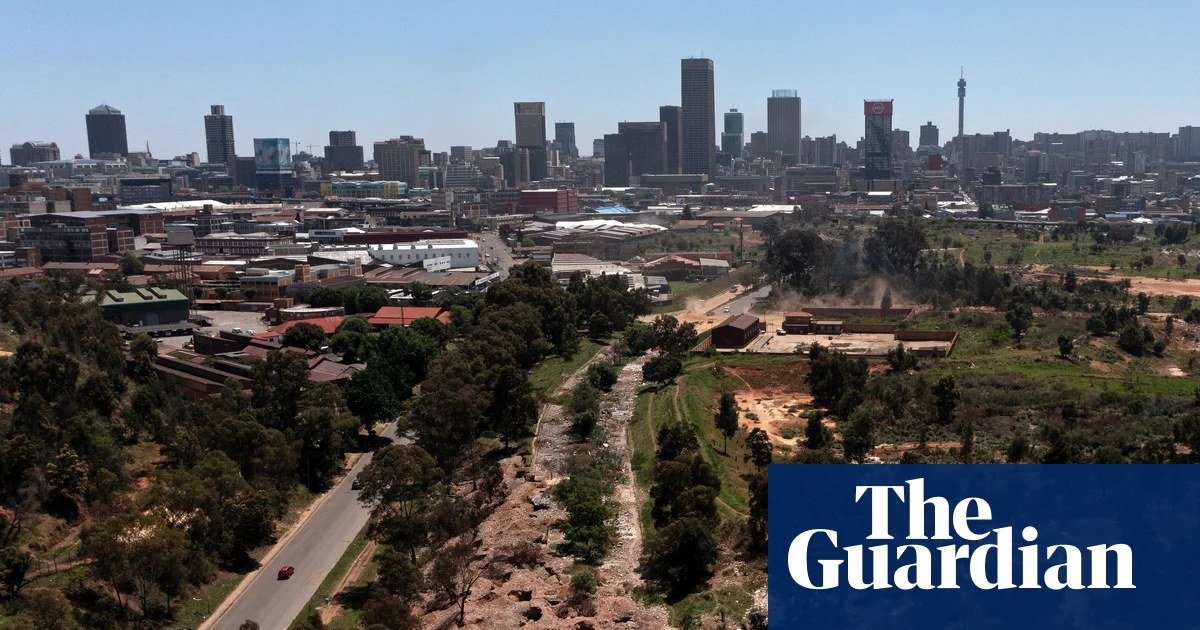
Escalating global gold prices continue to fuel informal and illegal mining across abandoned shafts in South Africa, creating ongoing tension between local entities, authorities, and criminal networks. Known locally as "zama zamas"—a Zulu term translating roughly to "taking a chance"—thousands of individuals operate in unsealed mining sites, primarily around Johannesburg and the Witwatersrand region.
The surge in activity has directly impacted local community initiatives. In late September, illegal miners established operations across from Community Led Animal Welfare (Claw), a charity based in Roodepoort at the former Durban Deep mine site. The charity, which cares for roughly 100 rescued and injured animals, experienced severe resource strain when miners began diverting water from its two 25,000-litre municipal supply tanks for gold processing. Founder Cora Bailey noted that the organization was forced to lock its gates by midday on one occasion after its reserves were depleted to just two buckets. Although police subsequently cleared the high grass concealing the workers, smaller groups returned shortly after to access drinking water.
Law Enforcement Challenges and Regulatory Gaps
South African law enforcement routinely carries out sweeps to curb illegal operations, reporting the arrest of 71 suspected zama zamas nationwide during one week in October. However, researchers estimate the illegal mining workforce numbers in the tens of thousands. A 2019 estimate by Marcena Hunter of the Global Initiative against Transnational Organised Crime indicated that illegal gold exports accounted for roughly ten percent of South Africa's total output, valued at approximately $1 billion.
Police interventions have also resulted in fatal outcomes. In 2025, authorities recovered 93 bodies from a mine shaft in Stilfontein following an enforcement tactic that blocked food and water deliveries underground. Observers and experts point to a combination of persistent poverty, unemployment, elevated gold values, corruption among police and politicians, and unfulfilled legal duties by commercial mining firms as key drivers of the ongoing crisis.
Under national regulations, commercial operators are required to rehabilitate land and seal decommissioned entry points. However, official data provided in 2025 by Mining Minister Gwede Mantashe revealed the existence of 6,100 derelict or ownerless mines alongside 1,170 unsealed, unsafe openings across the country. Experts note that a majority of the workforce occupying these spaces consists of migrant laborers from neighboring nations, including Zimbabwe, Mozambique, and Lesotho.
Infrastructure Damage and Disputed Blame
The proliferation of unregulated shafts has coincided with increasing land instability and severe infrastructure damage, including the total collapse of a section of Wemmer Pan Road, previously a key transit link between Johannesburg's central business district and its southeastern suburbs. Political figures, including Johannesburg transport council member Kenny Kunene, have publicly attributed these sinkholes directly to the digging activities of zama zamas ahead of local elections scheduled for November 4.
Geological and anthropological experts challenge the claim that illegal miners are the primary cause of regional ground collapses. Rosalind Morris, an anthropology professor at Columbia University, emphasized that large-scale industrial dewatering by formal mining operations—which removes hundreds of millions of gallons of underground water daily—is the main factor destabilizing the porous dolomitic rock. While acknowledging that localized digging by zama zamas causes structural collapses in targeted areas, Morris characterized claims attributing the broader sinkhole phenomenon solely to informal miners as incorrect.
Safety concerns and violent incidents, such as a mass shooting reported in Wedela township in September, are also frequently linked to mining zones. David van Wyk, lead researcher at the Bench Marks Foundation, noted that the violence is largely driven by armed criminal syndicates controlling access to the sites rather than the underground laborers, whom he described as heavily exploited. Meanwhile, community advocates like Vusi Cele of Mining Affected Communities United in Action argue that informal mining provides vital economic support to economically depressed townships like Khutsong, calling for formal artisanal mining licenses to be granted to local residents.
0 YORUMLAR
Bu KONUYA henüz yorum yapılmamış. İlk yorumu sen yaz...