
Efforts Underway to Replant Stranded South African Baobabs After Illegal Export Attempt
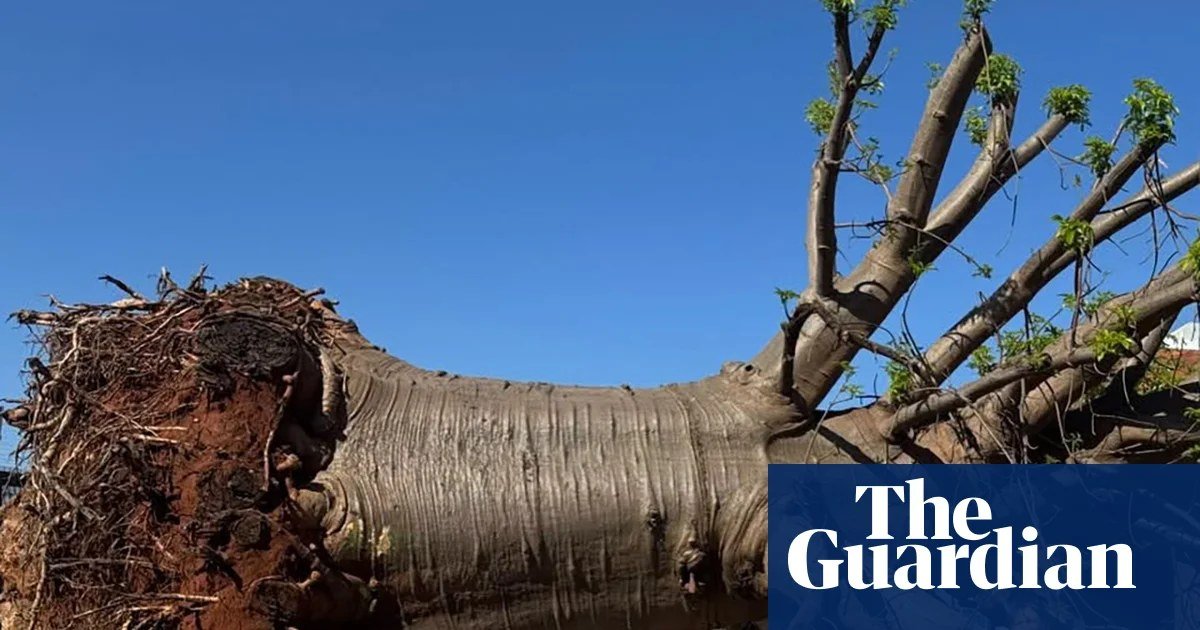
South African conservationists have launched a race to replant five centuries-old baobab trees that were illegally uprooted and prepared for export to Georgia. The specimens, weighing between 19 and 29 tonnes, arrived at a nature reserve in Timbavati in north-eastern South Africa on Wednesday, following months of being stranded at a Durban warehouse.
Authorities intercepted the 20-tonne scale giant trees in July after discovering they were extracted and moved without required permits. South Africa's Department of Forestry, Fisheries and the Environment verified that the trees were intended for a buyer in Georgia, though the specific individual or entity purchasing them has not been named. Officials have since opened a criminal case against the owner of a landscaping firm allegedly responsible for harvesting and transporting the trees illegally.
REPLANTING AND RECOVERY PROCESS
The rescue operation was delayed due to the logistical challenges of hauling the immense trees, which required specialized trucks designed for abnormal loads. The baobabs feature diameters reaching up to 4.5 meters (15 feet) and heights up to 12.5 meters. Estimated to be between 200 and 300 years old, experts note the trees could live up to 1,000 years if they successfully survive the relocation.
Sarah Venter, founder of the Baobab Foundation, is leading the replanting efforts and expressed optimism regarding their survival if placed into the soil quickly. Venter explained that moving the trees during their dormant winter period from May to October is ideal, but prompt action is critical as spring begins in November, when the trees draw on stored water to sprout new leaves. Because baobabs feature shallow root systems that regenerate rapidly, team members will secure the newly planted trees with supporting cables and construct electric fences to safeguard them from local elephant populations.
ECOLOGICAL AND CULTURAL SIGNIFICANCE
Under South African law, baobabs are strictly protected, making it illegal to cut or disturb them without official authorization. David Newton, programme office director for east and southern Africa at the wildlife trade monitoring NGO Traffic, noted that utilizing baobabs as ornamental plants is exceedingly rare due to the extreme difficulty of extraction, transport, and re-establishment.
Horticulturist and landscape designer Wambui Ippolito highlighted the ecological necessity of the species, describing baobabs as self-contained ecosystems and vital biodiversity anchors. The trees provide sanctuary for species such as bats, bush babies, grey-headed parrots, and southern ground hornbills, while their fruit sustains animals including elephants, monkeys, and warthogs. Ippolito also emphasized the deep cultural heritage tied to the ancient trees across Africa, where communities historically hold them as sacred landmarks.
PRECEDENT FOR INTERNATIONAL TRANSPORT
The situation reflects a similar event four years ago in Kenya, where eight uprooted baobabs were targeted for export to Shekvetili Dendrological Park in Georgia. That park is owned by Bidzina Ivanishvili, a billionaire and former Georgian prime minister known for collecting ancient trees via Black Sea transport. While environmental groups initially protested the Kenyan shipment over concerns of biopiracy, the export was eventually permitted to proceed.
0 YORUMLAR
Bu KONUYA henüz yorum yapılmamış. İlk yorumu sen yaz...