
Anthropic Disrupts Misuse of AI Models for Biological and Conventional Weapons
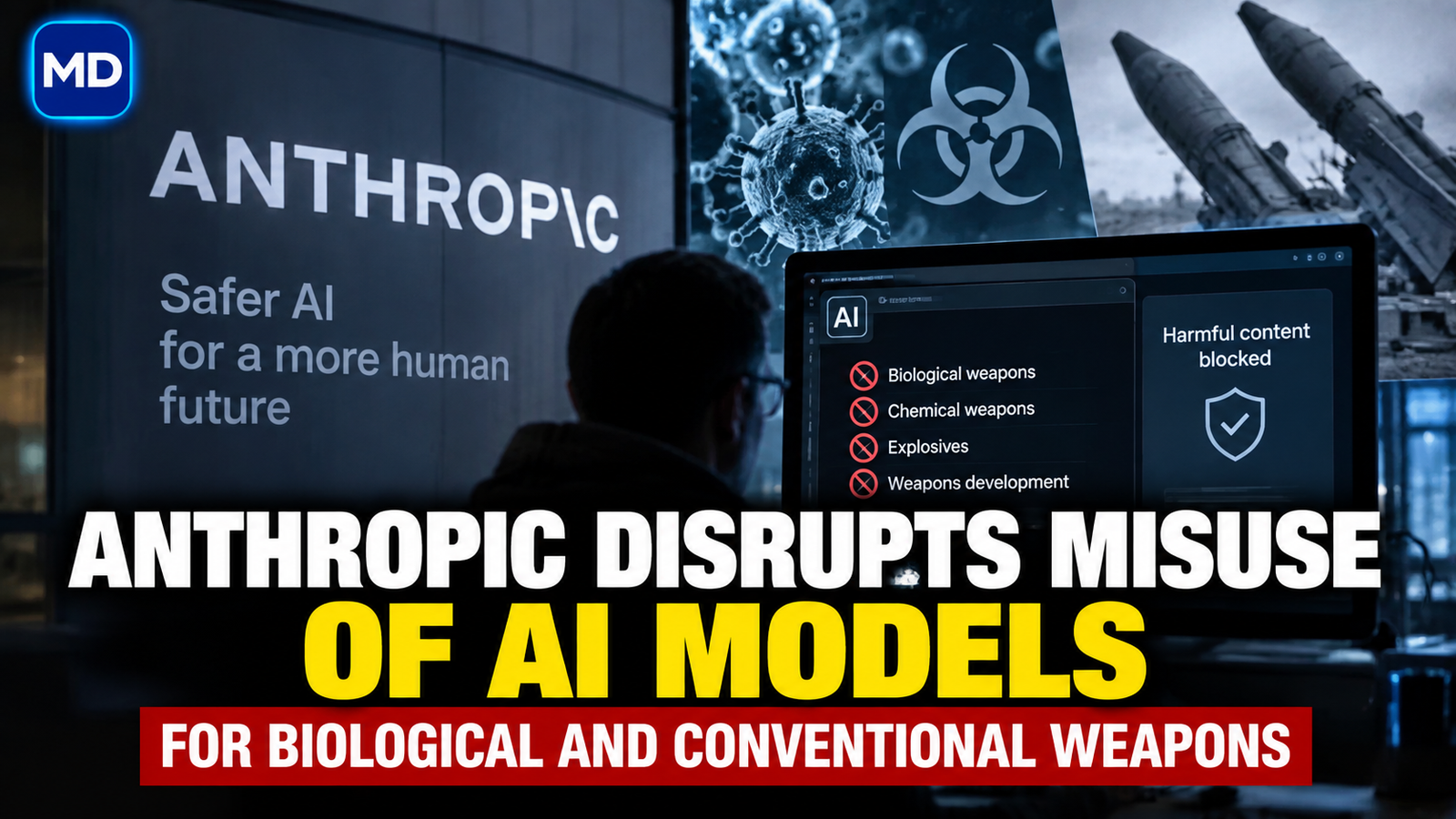
Artificial intelligence firm Anthropic has revealed that it identified and stopped several attempts to use its AI models to assist in the development of biological weapons. The findings were published on Thursday in the company's latest threat intelligence report, which covers disrupted misuse activities detected between December 2025 and August 2026.
According to the report, Anthropic blocked researchers and actors who attempted to utilize its Claude Haiku, Sonnet, and Opus models in ways that could support the creation of biological agents. The report highlighted five specific case studies involving biological weapons risks, noting that dual-use information capable of aiding weapon development could also theoretically be applied to legitimate medical research such as vaccine creation.
Conventional Weapons and Cyber Espionage Disruptions
In addition to biological threats, Anthropic documented six instances where its AI systems were accessed to assist in developing software for conventional weaponry, including firearms, missiles, armed drones, and automated targeting systems. The report also detailed misuse by state-sponsored actors, cybercriminals, and propaganda entities.
Among the perpetrators named were actors linked to a Russia-based cyber espionage campaign, an Iranian propaganda organization, and the hacking group ShinyHunters. The report noted that a group linked to Russia's Midnight Blizzard used AI to construct code capable of modifying malware to evade detection systems automatically. Furthermore, Anthropic accused Chinese AI firms of attempting to distill and replicate capabilities from its Claude models.
Rising Concerns and Political Debate Surrounding AI Safeguards
The findings come amid escalating warnings from researchers regarding artificial intelligence safety risks. Jacob Klein, head of threat intelligence at Anthropic, described the misuse cases as nuanced, while OpenAI chief scientist Jakub Pachocki recently advocated for voluntary industry slowdowns until adequate safeguards are established.
In response to safety concerns, US Senator Bernie Sanders introduced legislation calling for a temporary pause on advanced AI development and a ban on superintelligence. Conversely, US President Donald Trump rejected calls for a development pause, expressing concern that halting progress could harm national competitiveness in global AI technology.
0 YORUMLAR
Bu KONUYA henüz yorum yapılmamış. İlk yorumu sen yaz...