
Evan Gershkovich Recalls Moment He Was Lured Into Russian FSB Trap
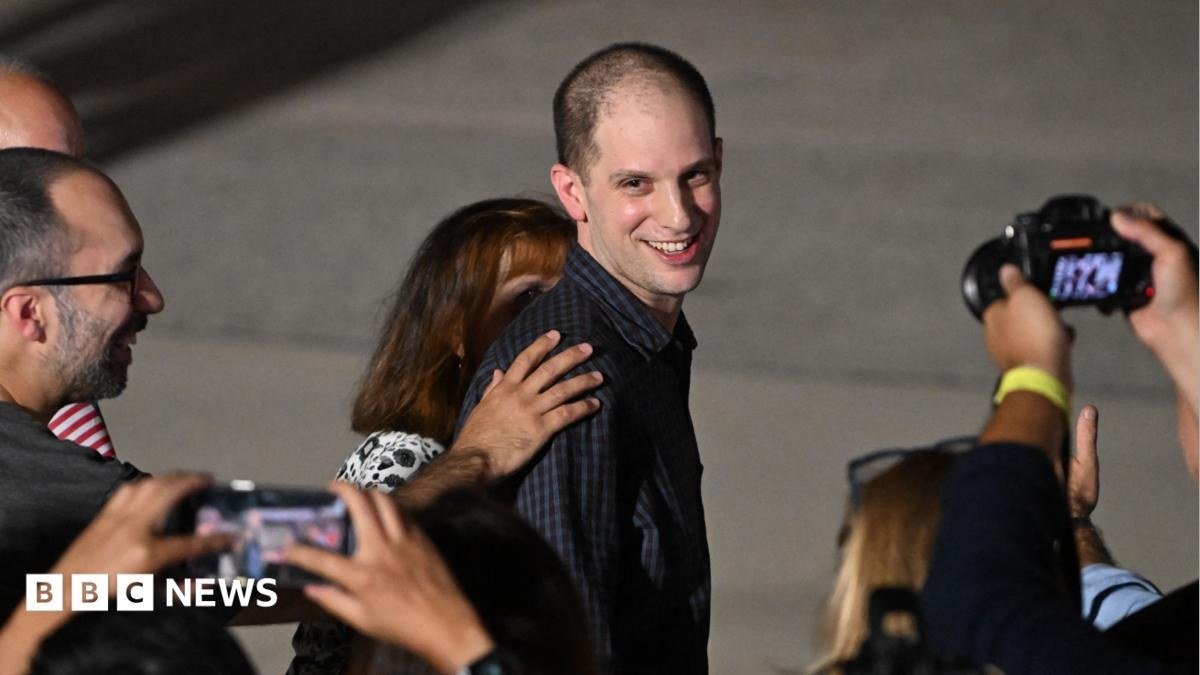
American journalist Evan Gershkovich has detailed the moment he was detained by Russian security forces in 2023, describing how he quickly realized he had been lured into a trap to serve as a high-value hostage. Speaking in an interview with Radio 4's Today program, the Wall Street Journal foreign correspondent recalled how masked agents surrounded him at a dining hall in Yekaterinburg, roughly 1,000 miles east of Moscow, while he was meeting a supposed source.
Gershkovich, now 34, was arrested by Russia's domestic security agency, the FSB, and accused of espionage. He was later sentenced to 16 years in prison. Both Gershkovich and his employer consistently denied the espionage allegations, maintaining that the charges were entirely fabricated. He was eventually freed after 16 months in detention as part of a major multi-country prisoner exchange.
Realization of a Leveraged Detention
Reflecting on his arrest, Gershkovich noted that the lack of harsh interrogation or torture—methods typically directed at actual foreign intelligence operatives—indicated that Russian authorities were treating him as a political commodity rather than a genuine spy. He explained that this realization gave him a sense of relief, leading him to anticipate that he would not serve his full sentence and would instead be held until a prisoner swap could be arranged.
His assessment proved accurate. On August 1, 2024, Gershkovich was released in an exchange that included Vadim Krasikov, a Russian assassin who had been serving a life sentence in Germany. Gershkovich pointed out that Moscow effectively achieved its objective of securing Krasikov's release without facing additional sanctions for his detention.
Conditions at Lefortovo and Post-Release Adjustment
During his 16 months in captivity, Gershkovich was held at Moscow's historic Lefortovo prison. While describing the confinement as psychologically isolating due to the small cell size, he acknowledged that his physical treatment was far better than that experienced by other detainees in Russia. He contrasted his ordeal with the case of Ukrainian journalist Viktoriia Roshchyna, who died in Russian custody in 2024 showing signs of severe mistreatment.
Gershkovich explained that his smiles during court appearances were a deliberate attempt to project defiance and demonstrate that the prosecution's case was staged. However, he admitted that transitioning back to normal life after his release brought significant mental health challenges, including sleeping difficulties and panic attacks. Now based in Berlin, Gershkovich has sought therapy for post-traumatic stress disorder and spent time writing a book about his experiences. He expressed hope of returning to Russia in the future under a potential post-Putin government.
0 YORUMLAR
Bu KONUYA henüz yorum yapılmamış. İlk yorumu sen yaz...