
UN COP31 Climate Summit Ends Without Deal Following Deep Divisions
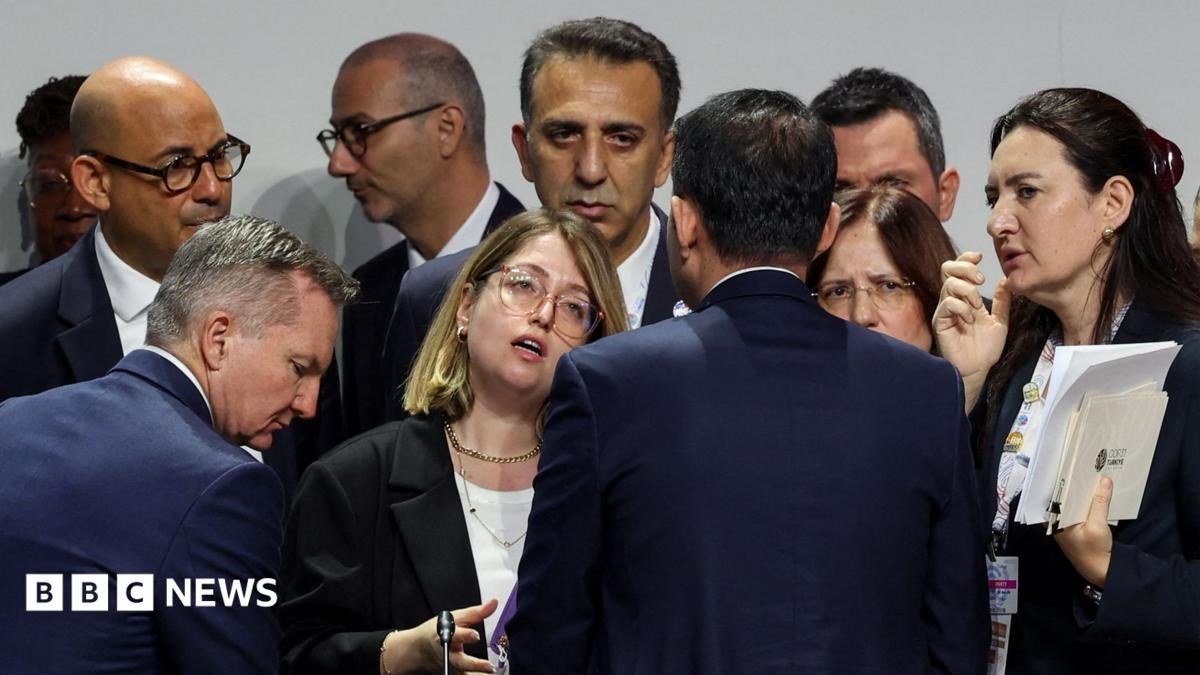
The UN COP31 climate conference in Antalya, Turkey, concluded without a major new international agreement after nations failed to resolve deep divisions regarding fossil fuels and financial aid for developing countries. The summit, which ran past its scheduled Friday deadline into Sunday, became the longest climate conference in UN history. The failure to secure a final consensus marks the first time since the 2009 Copenhagen summit that a main COP political agreement has collapsed.
A final draft presented early Sunday morning was rejected by the European Union, Pacific island nations, Panama, the Marshall Islands, and other delegations due to its omission of any direct reference to fossil fuels. The draft referenced coal, oil, and gas only through an indirect nod to the COP28 agreement to transition away from fossil fuels in energy systems. An earlier draft proposed on Monday had referenced fossil fuels six times but faced opposition from major oil-producing nations.
Opposition to the Draft Text
EU representative and Irish Minister Darragh O'Brien stated that the proposed decisions fell far short of the ambition required, calling a climate pact without mention of fossil fuels unconscionable. Conversely, Saudi Arabian delegate Mohammad Ayoub stated that Arab nations engaged in good faith while noting their historically small contribution to greenhouse gas emissions. Russia cautioned against moving away from fossil fuels too rapidly, arguing it would lead to fuel poverty.
Disagreements also centered on financial aid. Developing nations criticized the draft for omitting clear financial targets or baselines to assist poorer countries in adapting to climate impacts, despite a prior commitment at COP30 in Brazil to triple climate adaptation finance. Mohamed Adow of Power Shift Africa stated that wealthy nations could not continue arriving at negotiations without funding commitments.
Global Reactions and Summit Outcomes
UN Secretary-General Antonio Guterres expressed deep disappointment, criticizing fossil fuel interests for delaying action and distorting science. Former U.S. Vice President Al Gore argued that petro-states exercised veto power over the process and called for structural reforms to the UN multilateral framework. UK Energy Secretary Miatta Fahnbulleh described the outcome as immensely disappointing while noting the UK's commitment to climate action remains unwavering.
Australian Prime Minister Anthony Albanese and Minister Chris Bowen, who led the negotiations as COP31 president alongside host nation Turkey, cited unbridgeable red lines and a fraught geopolitical environment. Bowen noted that the stakes were heightened by intensifying global climate impacts, as 2026 tracks toward being the hottest year on record amid severe heat, drought, and flooding.
COP31 was also the first summit to formally address the likelihood of missing the 2015 Paris Agreement target to limit global warming to 1.5C above pre-industrial levels. According to the UN, current government policies put the world on track for approximately 2.8C of warming by 2100, meaning the 1.5C threshold is expected to be overshot in the coming years. Despite the collapse of the main political text, delegates achieved minor progress, including agreements on a framework to support clean-energy workforce transitions and support from over 80 countries for Turkey's target to raise global electricity usage to 35 percent by 2035.
0 YORUMLAR
Bu KONUYA henüz yorum yapılmamış. İlk yorumu sen yaz...