
EU Commission Chief Backs Plan to Grant Canada Associate Membership
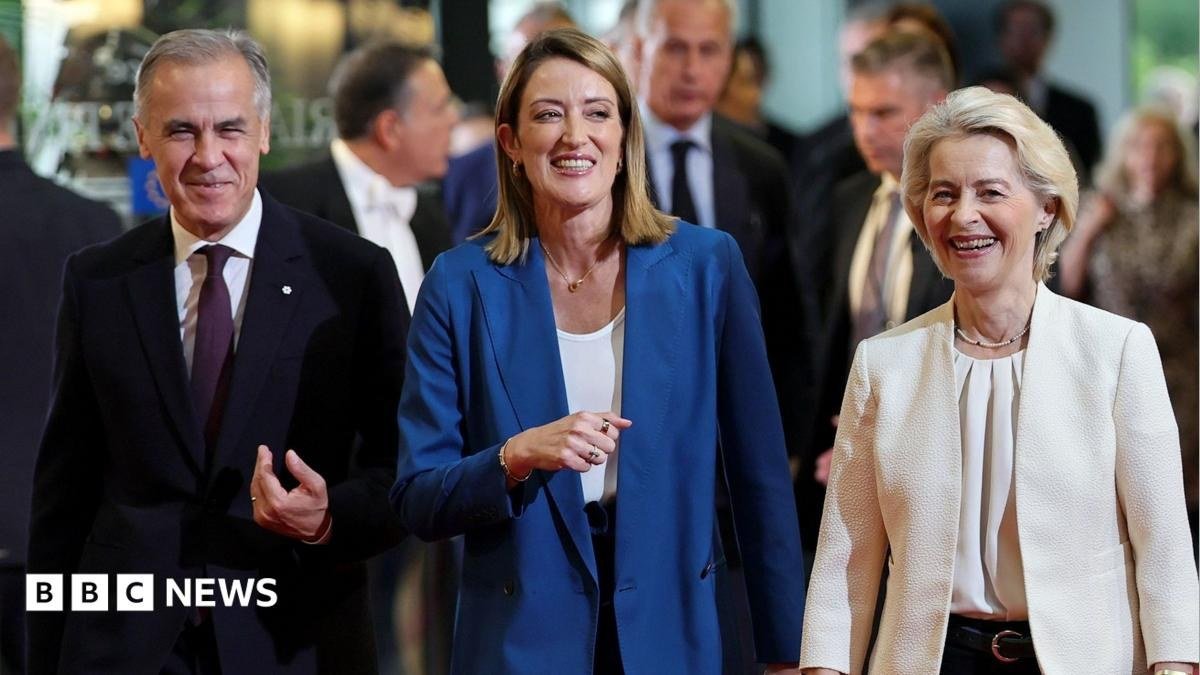
European Commission President Ursula von der Leyen has expressed support for proposals to grant Canada "associate member" status within the European Union. Speaking during her annual State of the Union address to the European Parliament in Strasbourg on Wednesday, von der Leyen stated she wants to work on opening the door to closer ties with Ottawa across key sectors.
The proposal follows statements from Canadian Prime Minister Mark Carney last week seeking a "unique alliance" with the European bloc. Carney, who attended the Strasbourg address, is scheduled to speak to the European Parliament on Thursday. The diplomatic initiative comes amid strained relations and a trade dispute between Canada and the United States, which saw bilateral trade negotiations collapse last month and lead to new tariff measures.
PROPOSED AREAS OF COOPERATION AND DIPLOMATIC CONTEXT
Without explicitly naming US President Donald Trump, von der Leyen remarked that offering Canada a form of EU membership was "not a partnership against anyone else, but for our common strength." She emphasized that the EU and Canada share common perspectives on issues including artificial intelligence, climate change, and geopolitics, while highlighting joint efforts regarding Ukraine, defence, raw materials, and supply chains.
Although von der Leyen did not provide specific details on how associate membership would function, she listed key areas for cooperation, including manufacturing, technology, AI, defence, energy, critical minerals, and economic security. Associate membership does not currently exist within the EU structure, and establishing the status could take years if agreed upon. Earlier this year, German Chancellor Friedrich Merz suggested a similar status for Ukraine, receiving a mixed reaction. Meanwhile, 10 of the 27 EU member states have yet to ratify a free-trade agreement reached with Ottawa nearly a decade ago, with some capitals favoring existing trade and defence frameworks over creating a new membership category.
EUROPEAN SECURITY COUNCIL AND DOMESTIC PRIORITIES
As part of the EU's policy priorities for the coming year, von der Leyen also proposed establishing a European Security Council to address security threats on the continent. The proposed body would involve partner nations such as the United Kingdom, Ukraine, Canada, and Norway.
Addressing broader domestic concerns, von der Leyen acknowledged public anxiety over the cost of living and rapid technological shifts impacting employment. Additional proposals outlined in the address included inviting major global AI laboratories to discuss supporting industry pace, reducing business bureaucracy, and introducing a new emergency mechanism to assist member states with mass migration movements following a deadly influx of migrants at the Spanish enclave of Ceuta in July. Von der Leyen also put forward measures to restrict social media access for children, including a ban for individuals under 13 and requiring parental supervision for users aged 13 to 15.
0 YORUMLAR
Bu KONUYA henüz yorum yapılmamış. İlk yorumu sen yaz...