
18 Suspects Transferred to US Over 2021 Assassination of Haitian President Jovenel Moïse
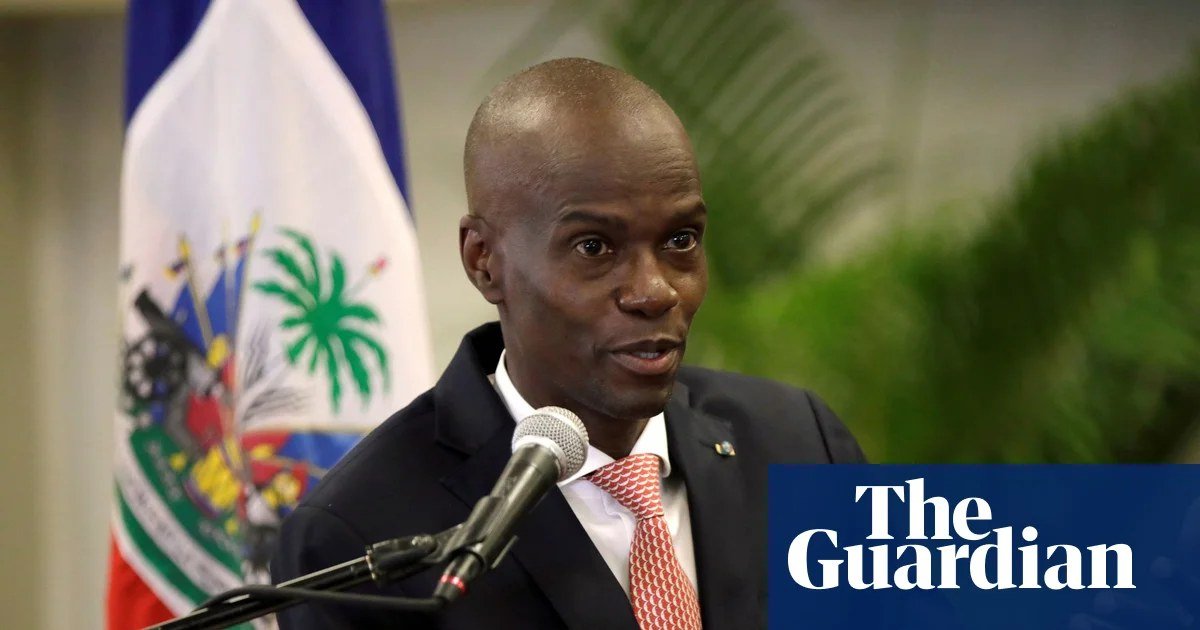
Eighteen individuals have been arrested and transferred from Haiti to the United States in connection with the July 2021 assassination of Haitian President Jovenel Moïse, according to American officials. The suspects were flown on a military aircraft to face federal charges in the Southern District of Florida, expanding a long-running international investigation into the plot.
FBI Special Agent Brett Skiles highlighted the coordinated effort, stating that the multi-location and international arrests demonstrate the agency's commitment to holding all participants in the plot accountable. Federal prosecutor Jason Reding Quinones confirmed on social media that 30 suspects have now been indicted in connection with the killing, noting that federal authorities are continuing their efforts to bring defendants before American courts. US courts maintain jurisdiction over the case because key elements of the conspiracy were planned on American soil.
Details of the Assassination and Legal Proceedings
Moïse, aged 53, was shot dead on July 7, 2021, at his private residence by a hired group of approximately 20 military-trained Colombian mercenaries. His presidential security team did not intervene to defend him during the attack.
Prior to these recent transfers, 11 individuals had been indicted in US courts. Five of those defendants have already received life sentences, including two retired Colombian soldiers, a former Haitian senator, a Haitian Chilean businessman, and a Haitian American. In May, four additional men were convicted in a Miami federal court on charges including conspiracy to kill or kidnap Moïse, conspiracy to provide material support, and violating the US Neutrality Act. Federal prosecutors stated those four men were affiliated with CTU, a Florida-based private security firm, and were drawn into the plot by promises of lucrative contracts following Moïse's removal. They now face potential life sentences.
Escalating Crisis and Security Challenges in Haiti
The assassination pushed Haiti into severe instability, leaving the country without a president. Violent gangs currently control roughly 80% of the capital, Port-au-Prince, where kidnappings for ransom, carjackings, and armed robberies remain widespread.
The nation is tentatively scheduled to hold a constitutional referendum alongside its first presidential and legislative elections since 2016 on December 13, contingent on security conditions. However, a United Nations-backed Gang Suppression Force deployed to support local police remains severely understaffed. Authorized by the UN Security Council last year to deploy up to 5,500 uniformed personnel and 50 civilian staff by October, a spokesperson confirmed the force will miss that target. As of July, fewer than 1,000 personnel from Chad, Mongolia, Jamaica, Guatemala, El Salvador, and Sri Lanka had been deployed.
0 YORUMLAR
Bu KONUYA henüz yorum yapılmamış. İlk yorumu sen yaz...