
UN Committee Declares Legal Obligation for States to Address Slavery Reparations
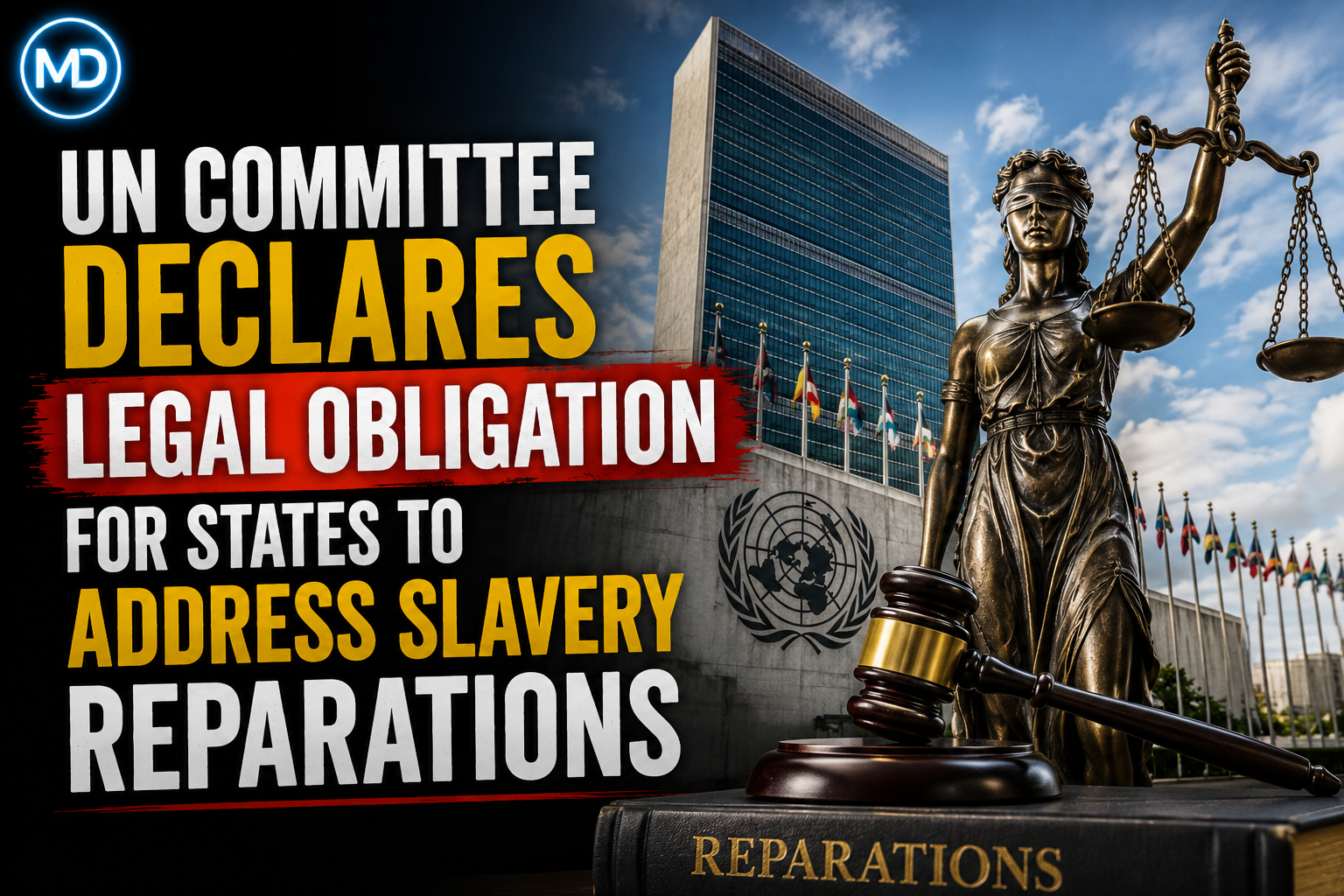
A United Nations panel has stated that countries are legally bound to consider reparations for the transatlantic slave trade and implement comprehensive steps to tackle the ongoing impacts of racial discrimination. According to guidance issued on Monday by the Committee on the Elimination of Racial Discrimination (CERD), these duties stem from current commitments under a legally binding 1965 international convention on racial discrimination, rather than the legal frameworks present during the era of the slave trade.
The committee framed this position as a major shift away from long-standing debates regarding historical responsibility, which governments have frequently cited to oppose reparations. Between the 15th and 19th centuries, at least 12.5 million Africans were captured and traded in what CERD identified as the largest forced displacement in human history.
Beyond Historical Laws and Financial Remedies
In legal disputes, some governments have previously invoked the principle of intertemporality, contending that no international laws prohibited the slave trade when it occurred. However, the committee's document clarifies that regardless of how original acts were categorized legally in the past, states remain obligated by their present treaty commitments to dismantle ongoing structural inequalities. The UN guidance highlights that states must enact comprehensive reparatory measures for people of African descent, noting that the document could be referenced in future court proceedings.
The guidance emphasizes that financial restitution by itself is inadequate. Instead, it calls for transformative actions, such as establishing independent truth commissions, granting access to archives, and re-evaluating public memorials. Pela Boker Wilson, a CERD expert from Liberia who contributed to drafting the guidance, stated that the committee expects countries to move past general expressions of regret to examine their laws and policies, taking concrete actions to affirm the dignity of those whose historical suffering was minimized or ignored.
Global Debates on Reparations
International momentum surrounding reparations—which encompass formal apologies as well as financial payouts—has increased, even as critics maintain that modern states and institutions should not bear liability for past acts. Demonstrating the ongoing political divide on the issue, Britain and the European Union abstained from a UN resolution regarding slavery in March.
0 YORUMLAR
Bu KONUYA henüz yorum yapılmamış. İlk yorumu sen yaz...