Scientists Develop First Working Nuclear Clocks, Paving Way for Ultra-Precise Timekeeping
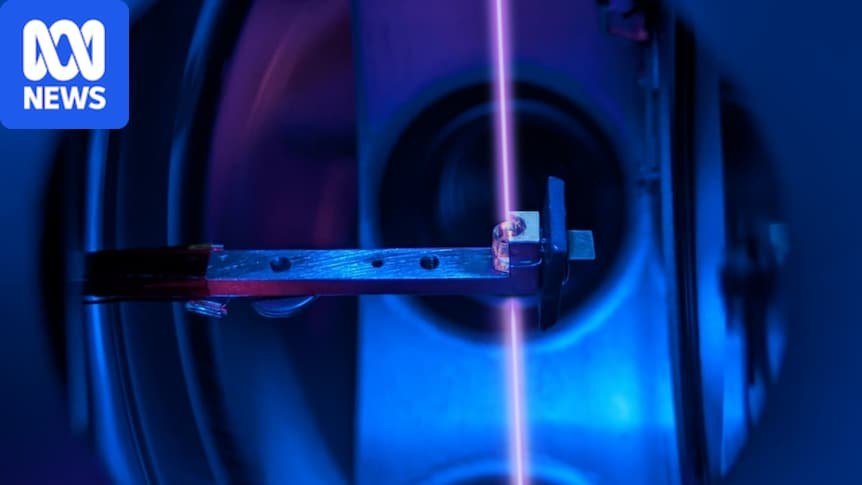
Two independent teams of researchers have constructed the world's first working nuclear clocks, opening up potential advancements in timekeeping precision. Details of the experimental devices have been published in two separate papers in the scientific journal Nature.
Nuclear clocks function similarly to current atomic clocks, which keep time by tracking changes in the electrons surrounding a caesium atom's nucleus. However, nuclear clocks monitor even smaller changes directly within the nucleus itself. Because an atomic nucleus is thousands of times smaller than a full atom, it can measure far more subtle shifts in time.
Technical Breakthroughs and Mechanisms
While nuclear clocks have been theorized for over two decades, technological constraints previously prevented their construction. To build the clocks, both research teams cultivated crystals containing thorium-229, a specific type of thorium atom possessing properties suitable for timekeeping. These crystals were suspended under ultra-precise lasers to generate nucleus-sized state changes, producing the internal "tick" of the clock.
Shiqian Ding, a physicist and study co-author at Tsinghua University, noted that building the device required overcoming multiple challenges, including synthesizing the correct crystal material and engineering sufficiently precise lasers. Thorsten Schumm, a physicist at the Vienna University of Technology (TU Wien) and co-author of the second study, explained that a primary breakthrough occurred in early 2024 when his team successfully used a laser to induce the necessary nuclear changes.
Current Accuracy and Future Potential
In their current experimental phase, both clocks are precise enough that they would lose or gain only one second over a period of 30 million years. Although this margin does not yet surpass the top-performing atomic clocks in operation today, scientists expect rapid improvements.
According to Victor Flambaum, a physicist at the University of New South Wales who was not involved in the studies, atomic clocks are nearing physical limits that prevent further accuracy gains. He stated that nuclear clocks hold the potential to become the most accurate instruments ever built by humans, as multiple research groups compete to develop practical models.
Practical and Scientific Applications
Because thorium-229 offers greater stability, Professor Schumm stated that nuclear clocks could eventually be scaled down into small, portable chip-sized devices. Such advancements could enhance navigation systems like GPS, which rely heavily on precise timekeeping.
Additionally, the clocks could measure how gravity alters time in accordance with Einstein's theories of relativity. By accurately tracking gravitational field gradients, the technology could assist in mining surveys and earthquake prediction by identifying underground structures.
The devices also offer applications in fundamental physics, including dark matter research. Professor Schumm's team has already utilized their clock in Vienna to detect evidence of dark matter as a proof of concept, with plans to install a second clock in Innsbruck within a year to measure subtle variations in Earth's orbit around the Sun.
0 YORUMLAR
Bu KONUYA henüz yorum yapılmamış. İlk yorumu sen yaz...