
COP31 Climate Summit Reaches Deadlock Over Fossil Fuel Language and Adaptation Funding
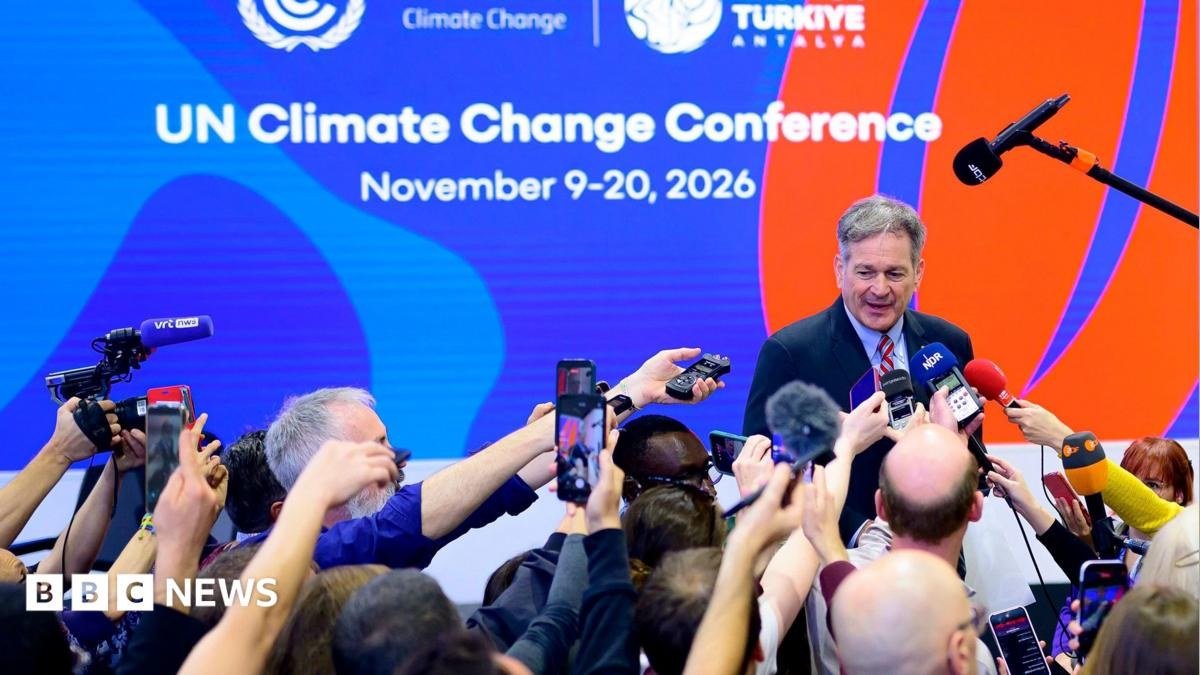
Negotiations at the COP31 UN climate summit in Turkey have stalled following overnight discussions, as participating nations remain divided over the inclusion of fossil fuel reduction targets and financial commitments for developing regions. A revised global agreement, officially known as the Antalya Accords, is expected to be released on Saturday.
Fossil Fuel Terms Spark Division
A coalition led by France and Panama, alongside representatives from island states and several European Union members including Spain, Belgium, Sweden, and Finland, launched a late intervention on Friday against a draft text that omitted references to reducing fossil fuel demand. The push follows efforts by major oil-producing countries, led by Saudi Arabia, to remove language regarding a transition away from oil, gas, and coal.
Panama's Environment Minister, Juan Carlos Navarro, stated that omitting fossil fuels from the final decision was unacceptable. French Minister of Ecological Transition Monique Barbut criticized references in the draft to carbon capture, use, and storage technologies, cautioning against using them to justify continued fossil fuel combustion. However, some EU nations declined to join the push, citing concerns over disrupting negotiations.
Australia's Climate Change and Energy Minister Chris Bowen, who is leading the talks, argued that the summit's focus should remain on implementation and advancing clean energy adoption. Reports indicate one compromise under consideration involves omitting explicit fossil fuel targets in exchange for petro-states committing to source 35 percent of their energy consumption from electricity by 2035.
Draft Formally Acknowledges Temperature Target Miss
For the first time at a UN climate summit, the draft Antalya Accords acknowledge that the international goal to limit global temperature increases to 1.5 degrees Celsius has been missed, marking an entry into a period referred to as "overshoot."
Developing Nations Demand Climate Finance
Financial aid remains another central point of contention. Earlier drafts of the summit text proposed increasing climate adaptation funding to $120 billion by 2035, but the provision was removed in later iterations. Zanetor Agyeman Rawlings, Ghana's Environment Minister and chair of the African Group of negotiators, rejected the removal, stating that developing nations are demanding resources to address impacts caused by emissions from developed countries.
Broader Geopolitical and Energy Context
The summit takes place amid shifting global energy dynamics. Solar energy led global energy demand growth for the first time this year, while the International Energy Agency noted that fuel supply disruptions in the Strait of Hormuz due to the Iran War provide an incentive to transition toward renewable electricity. Concurrently, US President Donald Trump, Chinese President Xi Jinping, and Russian President Vladimir Putin recently agreed at a meeting in Shenzhen to increase oil production to offset supply disruptions.
Environmental organizations monitoring the talks have voiced strong criticism regarding the summit's progress, with observers pointing to procedural friction after Turkey's lead negotiator exited key negotiation sessions.
0 YORUMLAR
Bu KONUYA henüz yorum yapılmamış. İlk yorumu sen yaz...