
New Zealand Kākāpō Population Tops 300 Following Record Breeding Season
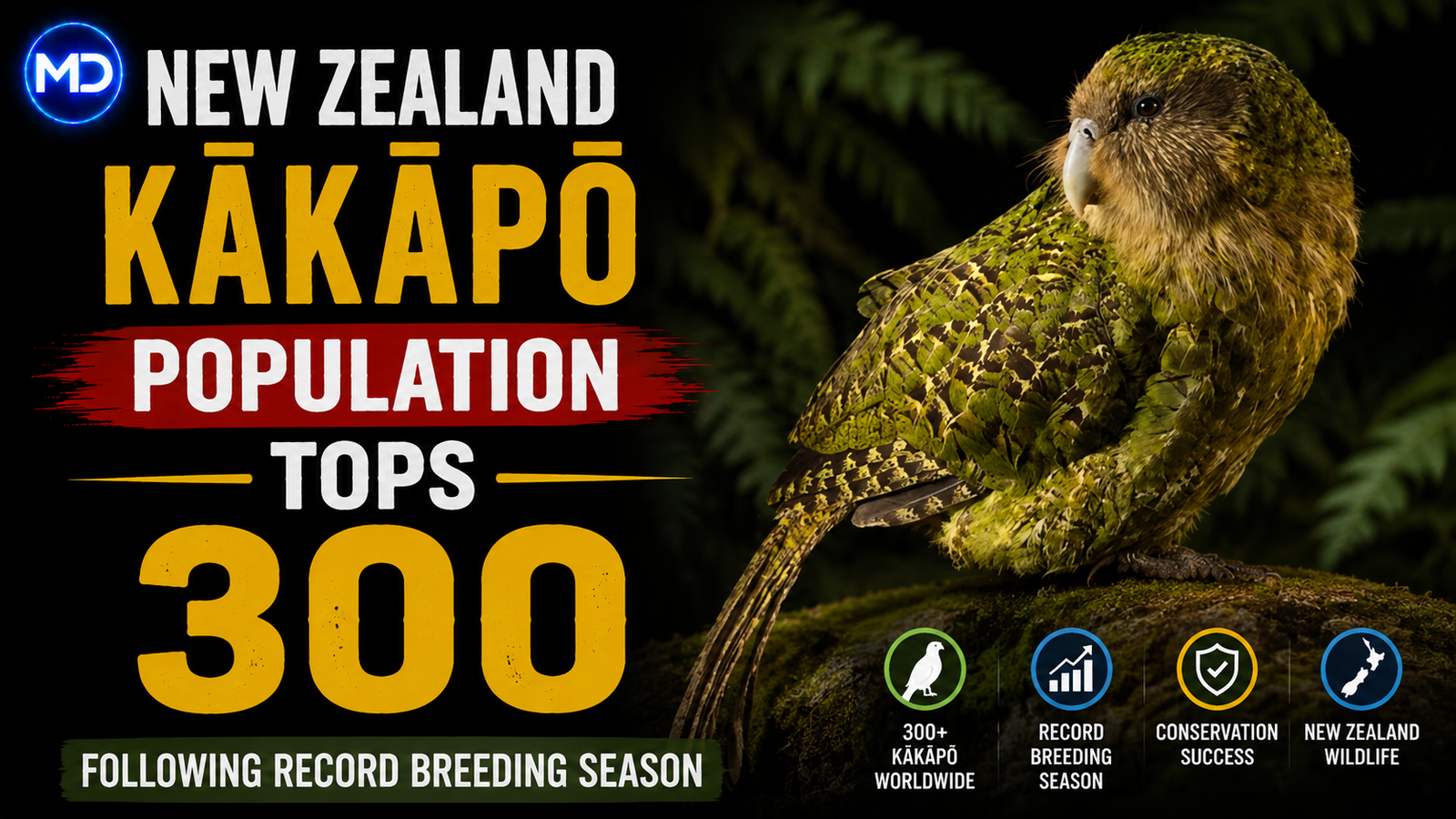
The population of the critically endangered kākāpō has risen to 325 following a record breeding season, marking the first time the species has surpassed 300 birds in approximately 75 years. The New Zealand Department of Conservation officially added 90 chicks to the total population count on September 1, reflecting a major milestone for recovery efforts.
The flightless, nocturnal parrot is the heaviest in the world, with adults weighing up to four kilograms and living between 60 and 80 years. Once widespread across New Zealand, kākāpō numbers crashed following the introduction of invasive predators including stoats and cats, bringing the species near extinction by the 20th century. A formal recovery initiative launched in 1995 when only 51 birds remained. Today, the three existing breeding populations reside exclusively on predator-free islands located off the coast of the South Island.
Rimu Fruit Harvest Drives Successful Breeding
Kākāpō reproduction relies heavily on the environment, taking place only every two to four years when native rimu trees undergo mass fruiting events. Following a four-year gap since the previous breeding period, a rich harvest of rimu berries triggered this year's record output. Deidre Vercoe, operations manager for the kākāpō recovery team, noted that during the early phase of the conservation programme, it took 16 years to yield an equivalent number of chicks.
The breeding process relies on unique mating behaviors. Male kākāpō construct dugout bowls in the soil to form a "lek," using chest air sacs to generate a low-frequency booming noise that can travel up to five kilometers. After mating, female birds take full responsibility for incubating eggs and raising offspring. Females lay between one and four eggs per clutch and care for their chicks over a period of about six months.
Population Milestones and Future Outlook
Young kākāpō are officially counted in the total population once they reach 150 days of age, at which point they fledge and achieve independence. The final chick included in the 2026 breeding tally was a female named Awarua-A3, who hatched on March 30. Public interest in the species remains high, with more than 100,000 viewers tuning in to a live stream of a female nesting and raising her chicks during the season.
Despite ongoing challenges involving low genetic diversity, infertility, and poor hatching success, conservation officials are preparing for future growth. According to predictive modeling cited by Vercoe, the next major breeding cycle could take place as early as 2028.
0 YORUMLAR
Bu KONUYA henüz yorum yapılmamış. İlk yorumu sen yaz...