
Nepal Flash Floods: Rescuers Search for Hundreds Trapped in Hydropower Tunnels
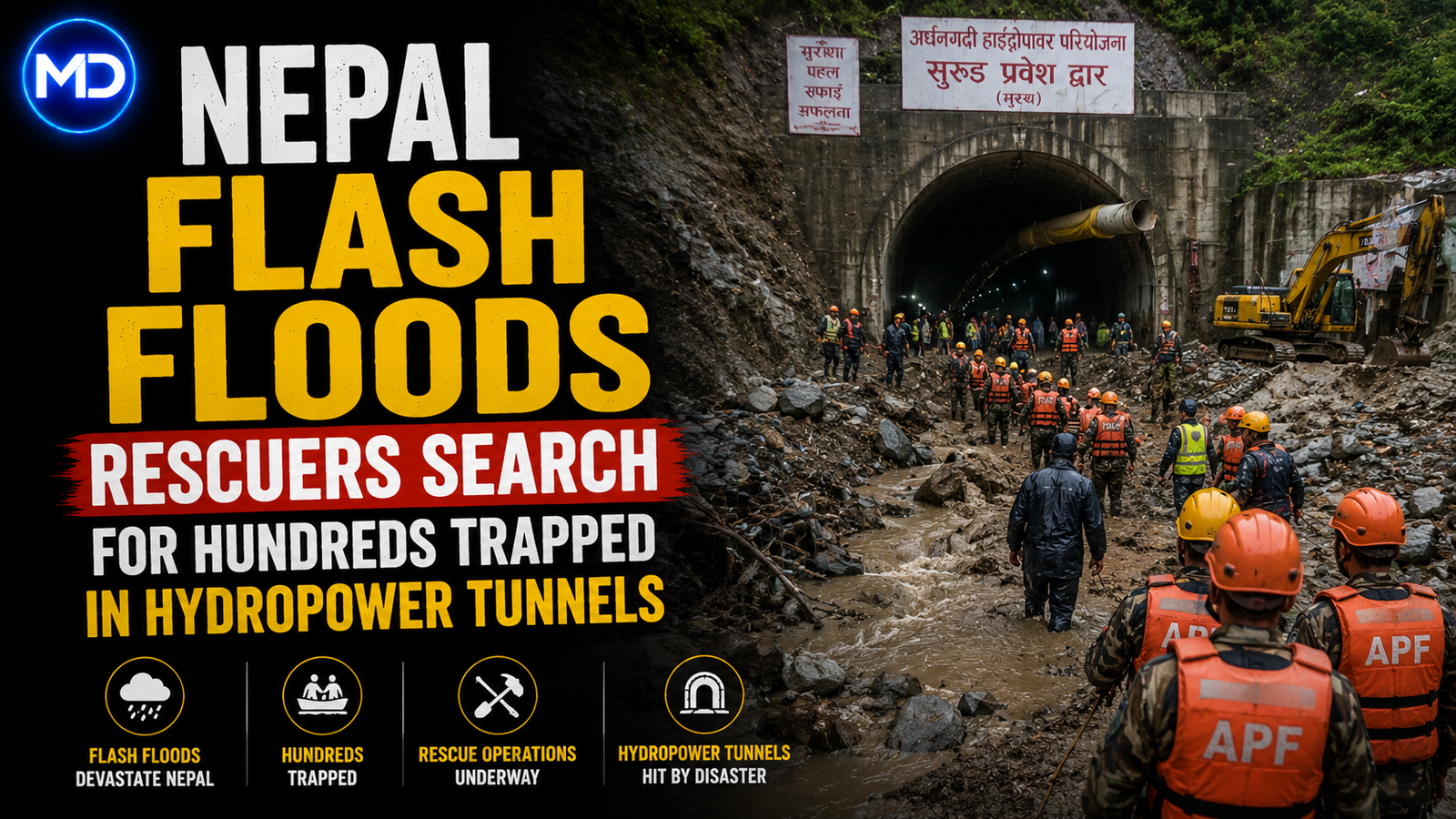
Rescue teams in Nepal are attempting to reach hundreds of missing workers believed to be trapped inside underground tunnels across 12 hydropower project sites following catastrophic flash floods. Nepal's disaster management authority reported that efforts are focused on locating more than 900 missing employees, with approximately 500 estimated to be trapped in water-control tunnels located in the heavily impacted Rasuwa and Nuwakot districts.
The overall death toll from last week's deluge of ice, rock, mud, and debris has climbed to 939, including 903 deaths confirmed in Nepal and 16 in neighboring Tibet. More than 4,400 individuals remain missing across both sides of the border. Experts warn that survival prospects within the flooded tunnels are declining as oxygen supplies decrease.
Challenges Impacting Rescue Operations
Search and rescue operations face major hurdles due to severe weather, difficult terrain, deep mud, and unstable water levels. Nepal Army spokesperson Raja Ram Basnet stated that heavy deposits of debris present a significant challenge to opening tunnel entrances. At the Upper Trishuli hydroelectric project, around 250 workers were rescued over the weekend, while military engineers initiated blasting operations to reach an estimated 42 missing individuals.
In Rasuwa's Chilime hydropower plant, an Indian specialized team is working alongside the Nepali army using pumps and excavators to locate at least eight missing workers. Mount Everest guides and volunteers participating in the efforts described navigating deep mud that reached chest height in certain sections. Rescuers are utilizing wooden planks and safety ropes to traverse the mud and reach internal stations where secure underground areas offer a potential chance of survival.
Infrastructure Damage and International Response
The flash floods destroyed more than 40 bridges and caused significant damage to Nepal's energy sector, disabling an estimated 700 megawatts of capacity, which accounts for roughly 10% of the country's total power output. Rescuers are relying heavily on helicopters for transportation, while India and China are providing prefabricated truss bridges to restore terrestrial access to isolated regions.
Nepali Prime Minister Balendra Shah reported that nearly 21,000 security personnel are deployed alongside civilian volunteers in the rescue effort. While Nepal has indicated it does not require general foreign search-and-rescue assistance, it has accepted technical expertise from India and China specifically for tunnel rescue operations. China has mobilized over 2,100 rescue personnel, allocated 220 million yuan (£24 million) for relief, and provided life-detection equipment. The UK government announced a £5 million emergency support package and dispatched a rapid deployment team to assist its citizens, with more than 30 British nationals among the missing.
Humanitarian agencies, including the Red Cross, estimate that over 93,000 people have been affected by the disaster. Floodwaters from the Trishuli River continue to shift unpredictably, complicating logistics and heightening fears of secondary flooding from an overflowing lake formed along the Nepal-China border.
0 YORUMLAR
Bu KONUYA henüz yorum yapılmamış. İlk yorumu sen yaz...