
KMT Retains Taipei Mayoralty as Local Election Results Yield Mixed Outcomes Across Taiwan
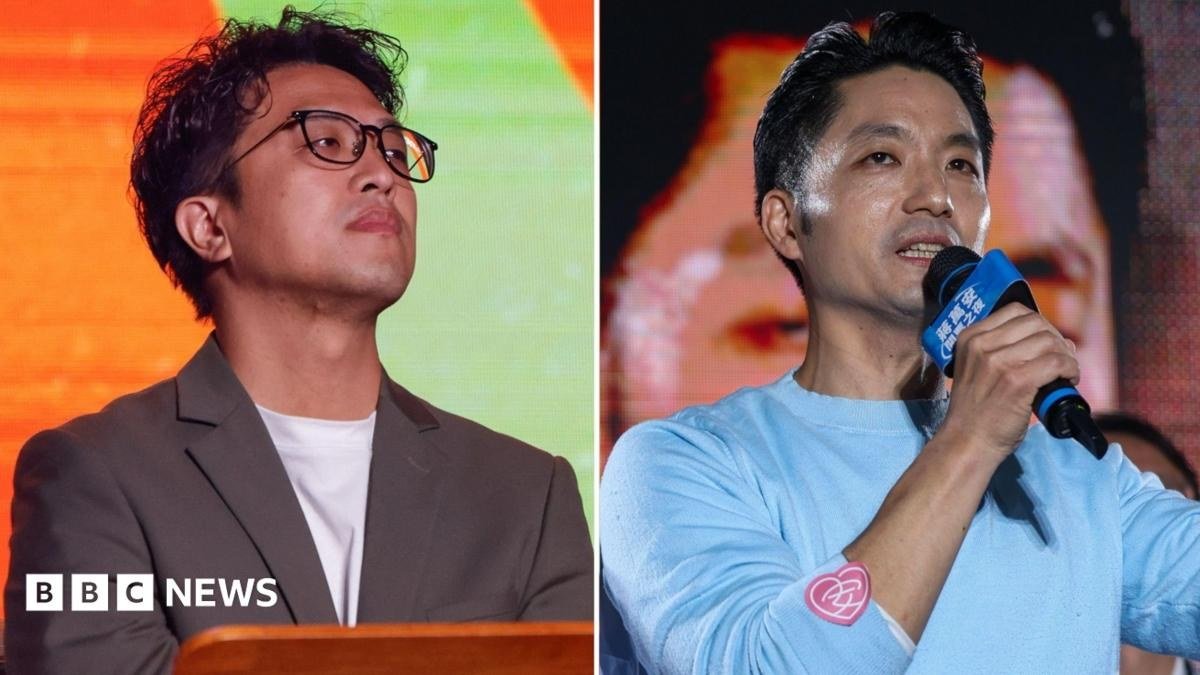
Taiwan's main opposition party, the Kuomintang (KMT), retained the key mayoral seat in Taipei during local elections on Saturday, though it experienced significant losses elsewhere across the island. Incumbent Mayor Chiang Wan-an of the KMT, which favors closer relations with China, secured re-election with nearly 54% of the vote. Chiang defeated the ruling Democratic Progressive Party's (DPP) candidate, Puma Shen, a former activist who is currently under sanctions by Beijing.
Chiang's winning margin was notably lower than his performance four years ago, when he won the mayoralty with over 67% of the vote. Speaking to supporters, Chiang stated that the electorate's choice endorsed his administration's performance and demonstrated that a "silent majority" sought stability, prosperity, and practical solutions over political division. While the election results do not directly alter policy toward China, the vote is regarded as a key indicator of party support ahead of Taiwan's early 2028 presidential election.
DPP Gains Ground in Traditional Opposition Strongholds
Despite failing to capture the Taipei mayoralty—a position the DPP has not held in nearly three decades—the ruling party secured victories in areas traditionally viewed as KMT strongholds. Conceding defeat, Shen described the overall outcome as a "victory for democracy" and emphasized that his party would carry forward its spirit despite the loss. Shen's campaign utilized social media to focus on local issues such as public transport and affordable housing.
The elections took place amid broader geopolitical tensions and targeted disinformation. Ahead of the vote, Beijing publicly labeled Shen a danger to stability in the Taiwan Strait. Investigations by BBC Verify revealed that the DPP, including Shen and President Lai Ching-te, was targeted leading up to the election by AI-generated deepfake videos featuring false claims and derogatory imagery.
Cross-Strait Responses and Electoral Implications
Following the election results, China's Taiwan Affairs Office issued a statement asserting that political shifts in Taiwan would not alter the trend toward reunification. In response, Taiwan's Mainland Affairs Council urged the Chinese Communist Party to engage directly with Taiwan's democratically elected government without preconditions and on an equal footing.
The regional results also created political complications for the KMT outside the capital. The opposition party failed to retain the mayoralty in the central city of Taichung following the exit of outgoing KMT mayor Lu Shiow-yen, who had reached her two-term limit. Analysts noted that the KMT's inability to hold Taichung could affect internal party dynamics and potential nominations for the upcoming 2028 presidential race, where President Lai Ching-te is widely anticipated to run for a second term.
0 YORUMLAR
Bu KONUYA henüz yorum yapılmamış. İlk yorumu sen yaz...