
Fossilised Dinosaur Dung Yields Remarkably Preserved Extinct Bird Feather
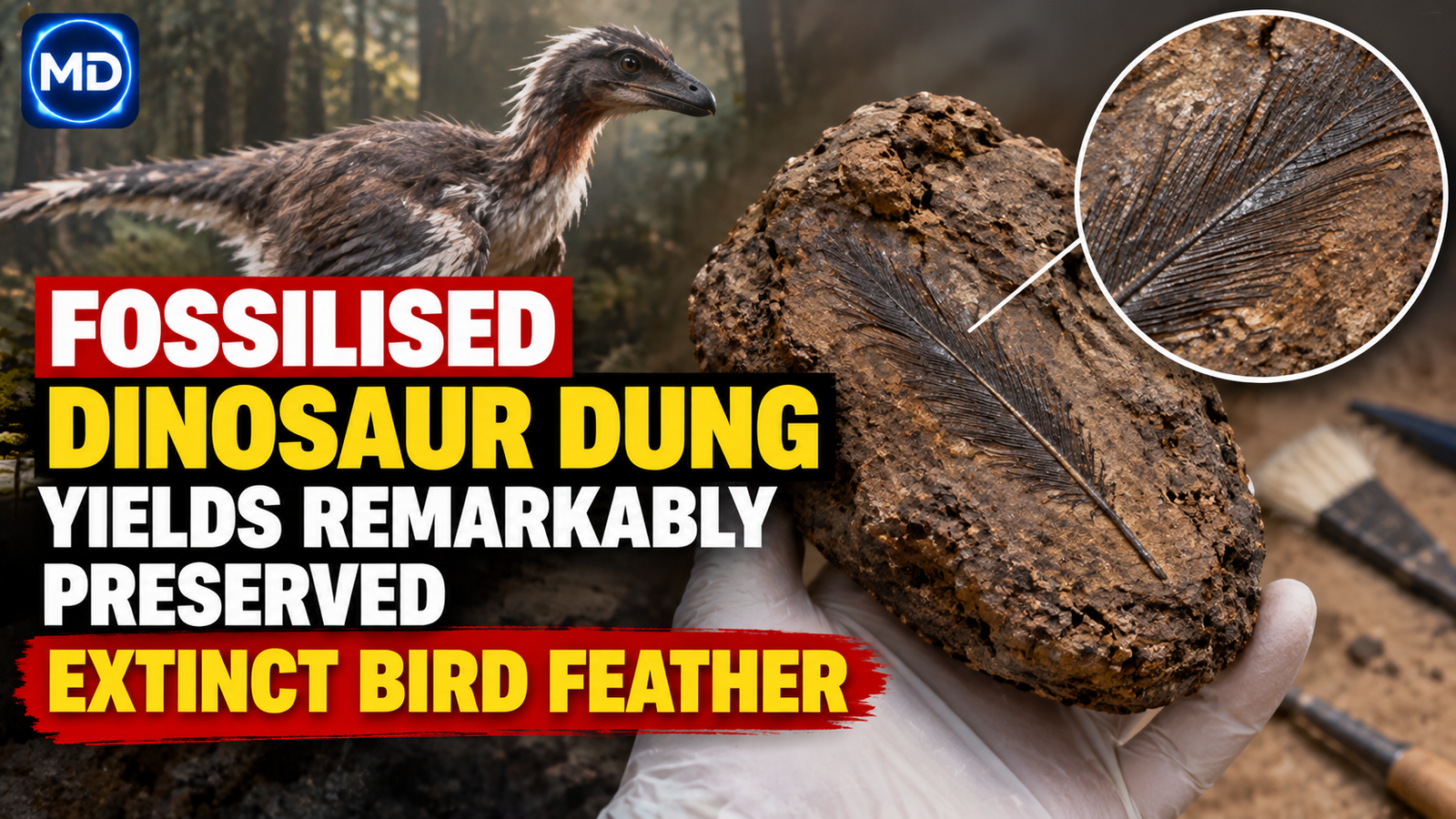
Palaeontologists have discovered an exceptionally well-preserved feather inside fossilised dinosaur faeces, marking the first time a feather has been identified within a coprolite. The finding, published in the journal Current Biology, could offer key insights into why ancestors of modern birds managed to survive the mass extinction event 66 million years ago.
The specimen was originally uncovered in 2016 at the Hell Creek Formation in Montana by study co-author David DeMar. While searching for fish fossils, DeMar spotted a dark, reddish-brown nodule roughly half the size of a golf ball. The coprolite later broke open, revealing an intact feather dating back to the Late Cretaceous period. Despite over 110 years of intensive palaeontological study at the Hell Creek site, no feathers had previously been discovered there.
CT Scans Reveal Ancient Food Web
Advanced micro-CT scanning exposed additional contents inside the fossilised dung, including several more feathers, leg bones from a small bird, and minute fish scales. Lead author Jingmai O'Connor, associate curator of fossil reptiles at the Field Museum in Chicago, noted that the dinosaur species potentially responsible for the dung were unlikely to eat fish directly. Researchers hypothesise that the fish scales were inside the bird's stomach when the bird was consumed, effectively recording two distinct food chain interactions in a single fossil.
The exact creature that produced the coprolite remains unconfirmed, though researchers suggest it may have come from a large theropod such as Tyrannosaurus rex or Nanotyrannus based on its size and contents.
Clues to Avian Survival
Analysis indicates the feather likely belonged to a hesperornithiform—an extinct group of flightless, aquatic birds closely related to modern crown birds. Unlike today's surviving avian lineages, hesperornithiformes perished during the mass extinction 66 million years ago. Dr O'Connor explained that differences in plumage characteristics, such as advanced insulating body feathers and modern wing structures, may have determined which bird lineages survived the catastrophe.
Steven Salisbury, a vertebrate palaeontologist at the University of Queensland who was not an author on the study, called the discovery impressive, noting that most feather fossils consist only of impressions rather than the actual preserved feather structure. While describing the insulation hypothesis as intriguing, he noted that additional fossil evidence will be required to confirm it. Following the discovery, researchers are urging palaeontologists to scan existing museum collections of coprolites for hidden organic remains.
0 YORUMLAR
Bu KONUYA henüz yorum yapılmamış. İlk yorumu sen yaz...