
Cape Town Plans Relocation of Problem Baboon Troops Amid Growing Controversy
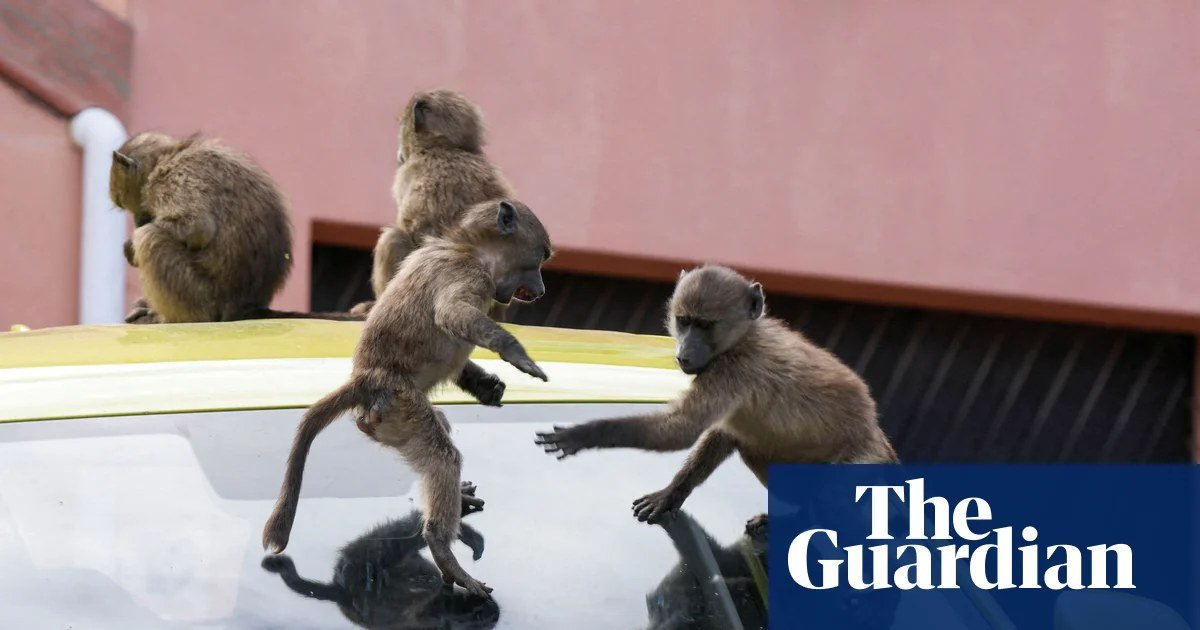
Cape Town city council has announced plans to imminently capture, sterilize, and permanently relocate two troops of chacma baboons following escalating conflicts between the animals and local residents. The decision to move the Waterfall and Seaforth troops to a newly built sanctuary has drawn sharp criticism from animal rights activists, who advocate for coexistence and non-removal strategies.
The city's baboon management challenges have intensified over the past two years on the Cape Peninsula, where narrow geography leaves baboons caught between Table Mountain National Park and suburban development. A 2025 census revealed that the managed baboon population on the peninsula has grown by a third since 2000, rising from 360 to 493 animals spread across 12 troops. Driven by a natural instinct to seek low-lying land with better water and vegetation, the baboons frequently enter developed areas.
Rising Conflict and Property Damage
In towns such as Simon's Town, baboons have caused significant disruption by tearing off roof sheeting, searching unlocked cars, raiding food pantries, and breaking into convenience stores and residences late at night. Justin O'Riain, a behavioural ecologist at the University of Cape Town, noted that constant intrusions and waste have negatively impacted local property values.
To address the issue, the city plans to erect a baboon-proof fence along the northern boundary between urban neighborhoods and nearby mountains alongside the relocation of the two troops. An earlier 2025 management proposal by the Cape Baboon Partnership (CBP) suggested moving four troops, but the plan was adjusted to allow two northern troops to remain and adapt to their existing habitat, according to CBP leader Joselyn Mormile.
Debate Over Fencing and Animal Welfare
Cape Town's baboon management programme currently costs approximately 20 million rand (£920,000) over 18 months, which includes funding full-time rangers to monitor troops. Opponents of the relocation plan, including peaceful protesters and select scientists, argue that the city should construct exclusion fences rather than remove the baboons, emphasizing the animals' ecological role in seed dispersal and warning of social disruption to the troops.
However, O'Riain cautioned that fences alone might simply direct the animals toward adjacent low-lying neighborhoods due to insufficient food sources in fenced high-altitude zones. Meanwhile, animal welfare concerns continue to rise; although chacma baboons are not classified as endangered, individuals have faced increasing violence, including illegal shootings, poisonings, dog attacks, and vehicle strikes as human frustration grows.
0 YORUMLAR
Bu KONUYA henüz yorum yapılmamış. İlk yorumu sen yaz...