Iceland Votes Against Resuming European Union Membership Talks
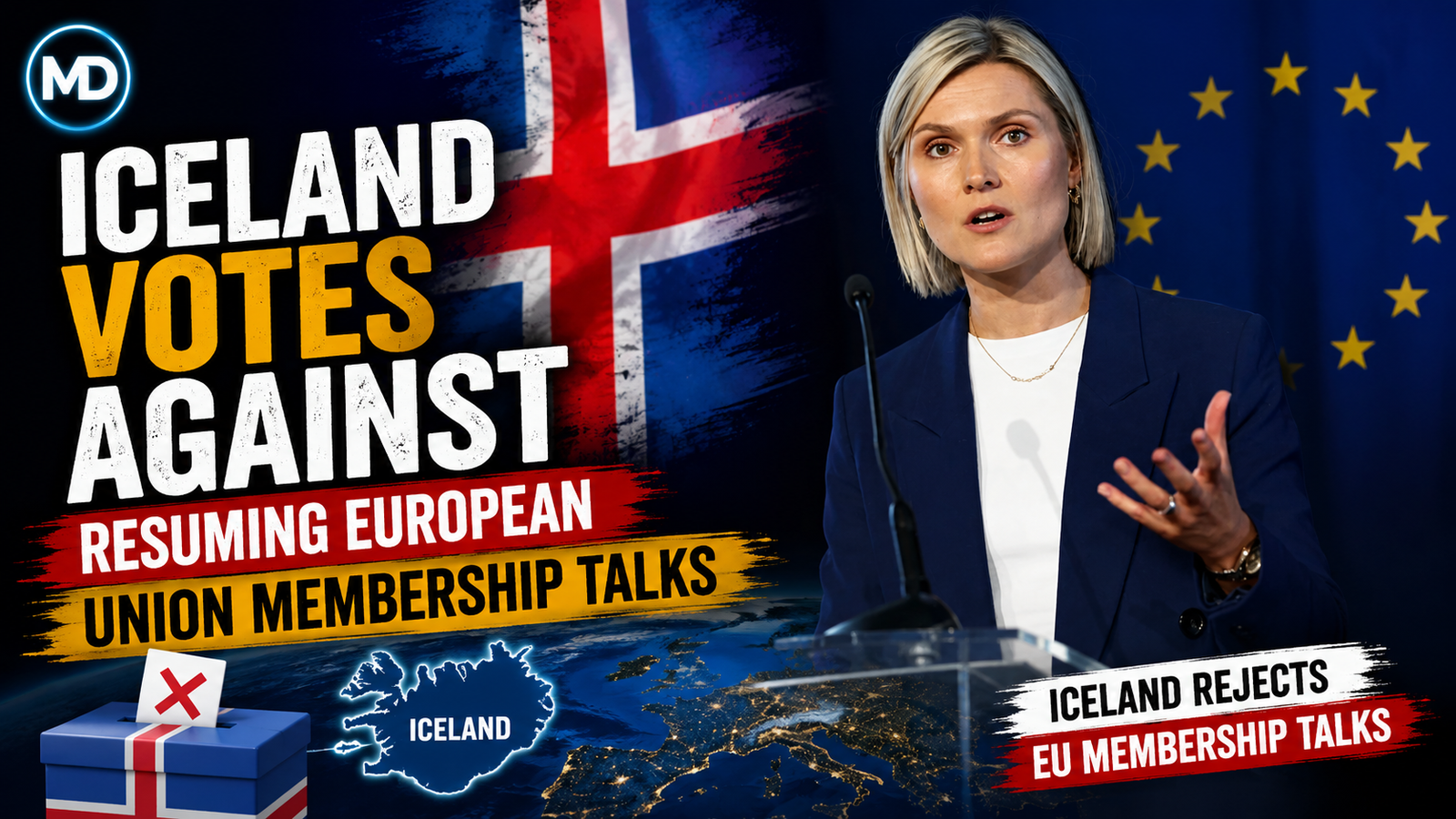
Icelanders have voted against restarting negotiations to join the European Union, halting a proposal to reopen talks 13 years after they were suspended. Official figures reported by public broadcaster RUV show that 52.8% of voters rejected the government's measure to resume accession discussions, while 47.2% supported it, marking a difference of approximately 12,600 votes. Voter turnout reached 82.5% among the roughly 270,000 eligible citizens, representing the highest participation rate in an Icelandic election since 2009.
Following the results, Prime Minister Kristrún Frostadóttir announced that her centre-left administration will not revisit the issue of EU membership for the remainder of its term in office. Although the government had initially pledged to hold a referendum by 2027, the vote was brought forward due to rising international tensions, including threats by US President Donald Trump regarding Greenland. However, the domestic campaign focused heavily on national sovereignty and the protection of the country's domestic fishing industry.
Fishing Industry and Regional Divides Shape the Outcome
Iceland's relationship with the EU has long been complicated by fisheries management. Marine and fish products account for nearly 40% of the nation's exports, and opponents expressed concern that EU membership would force Iceland to cede control over its fishing grounds under the bloc's common quotas. Eirikur Bergmann, a politics professor at Bifröst University, noted that the No campaign successfully connected with national identity and independence traditions, whereas the Yes campaign focused largely on technical aspects. Voting patterns also revealed a sharp geographical split, with capital city Reykjavík backing the resumption of talks and rural areas voting against it.
Iceland initially applied for EU membership in 2009 following the 2008 banking collapse, but talks were put on hold in 2013 under a eurosceptic government. While Iceland remains integrated into the EU's single market and Schengen border-free area, full accession would require joining the customs union and adopting the euro. A approval in this referendum would only have authorized negotiating an accession agreement, which would have required a second referendum for final ratification.
Security Considerations and International Reactions
Although economic and fishing concerns led the domestic debate, security issues were also part of the broader context. As a founding NATO member without its own standing military, EU membership would have provided Iceland access to the bloc's joint defense framework amid concerns over Russian maritime maneuvers and US rhetoric concerning Greenland. In response to the referendum outcome, Foreign Minister Katrín Gunnarsdóttir stated she would work to strengthen bilateral defense partnerships with other nations.
The result drew varied responses internationally. Analysts and an unnamed EU diplomat characterized the outcome as a missed opportunity and a setback for Brussels' Arctic ambitions. Conversely, European eurosceptic political leaders, including Reform UK's Nigel Farage and France's Marine Le Pen, welcomed the decision as a defense of national sovereignty.
0 YORUMLAR
Bu KONUYA henüz yorum yapılmamış. İlk yorumu sen yaz...