
Uncertainty Surrounds 99 Colombian Guerrillas Following Government Disarmament and Leadership Change
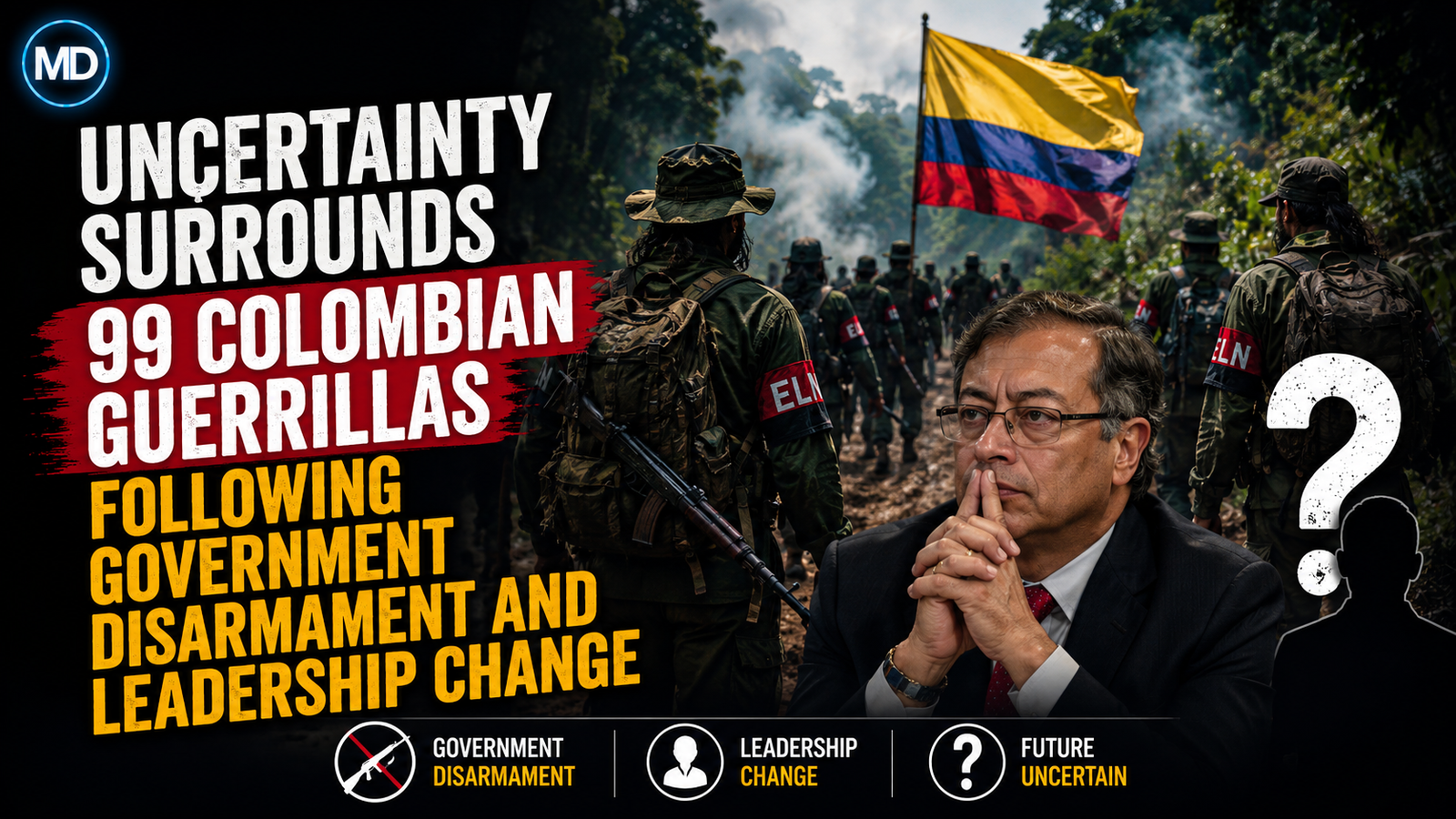
Ninety-nine former guerrilla fighters in Colombia remain in legal and physical limbo after surrendering their weapons under former President Gustavo Petro’s "total peace" initiative just days before a shift in the country's national leadership.
In mid-June, the combatants were transported by helicopter to a rural settlement in southern Colombia, where they handed over rifles, pistols, machine guns, and grenade launchers to government officials. The fighters burned their tactical gear, field packs, and camouflage uniforms to mark their intended transition to civilian life. The group represented the sole faction to disarm under Petro’s ambitious plan, which sought to disarm an estimated 30,000 members of Colombia's criminal networks.
Policy Shift Under New Administration
The disarmament occurred three days prior to a presidential runoff election won by Abelardo de la Espriella, a far-right millionaire lawyer. De la Espriella campaigned on ending the "total peace" strategy in favor of military action, including airstrikes and targeted operations against criminal organizations. His administration has since initiated promised airstrikes, leaving the future of the disarmed group unclear.
The former combatants are currently housed in a temporary location zone, known by its Spanish acronym ZUT. The government-controlled facility provides communal living quarters, painted murals, regular meals, and basic recreational areas, but strict security measures prohibit weapons, and residents are under constant surveillance without permission to leave. Military forces guard the perimeter from less than a mile away.
Legal Vulnerabilities and Government Restructuring
Under Petro's initial decree, existing arrest warrants against the 99 individuals are suspended, and state protection is mandated through December 25. However, President De la Espriella holds the authority to revoke the decree early and has publicly reiterated that his government will not negotiate peace agreements with armed groups.
Armando Novoa, the former government official who led peace negotiations with the faction, warned that revoking protection or launching military actions against the unarmed individuals inside the ZUT would constitute a major breach of basic human rights. Novoa recently resigned following institutional changes that absorbed the Office of the High Commissioner for Peace into the newly established National Security Commission—a restructuring expected to eliminate over 200 positions.
Background of the Disarmed Faction
The 99 individuals were formerly part of the Commandos of the Frontier, an armed group of roughly 1,000 fighters operating under the National Coordinator of the Bolivarian Army (CNEB). The CNEB is a dissident faction of the former Revolutionary Armed Forces of Colombia (FARC) comprising about 2,500 members near the border with Ecuador. Former negotiator Novoa noted that many of the disarmed combatants joined the group for economic motives rather than ideological alignment, frequently referring to the organization simply as "the company."
While the disarmed group remains in the ZUT awaiting promised vocational support, psychosocial care, and stipends of approximately £425 a month that have not yet been disbursed, the broader security situation remains volatile. De la Espriella recently approved a long-standing U.S. extradition request for CNEB negotiator Geovany Andrés Rojas, known as "Araña," who faces drug trafficking charges, signalizing a complete departure from previous diplomatic efforts.
0 YORUMLAR
Bu KONUYA henüz yorum yapılmamış. İlk yorumu sen yaz...