
Global Leaders Gather in Asia for High-Stakes APEC and ASEAN Summits
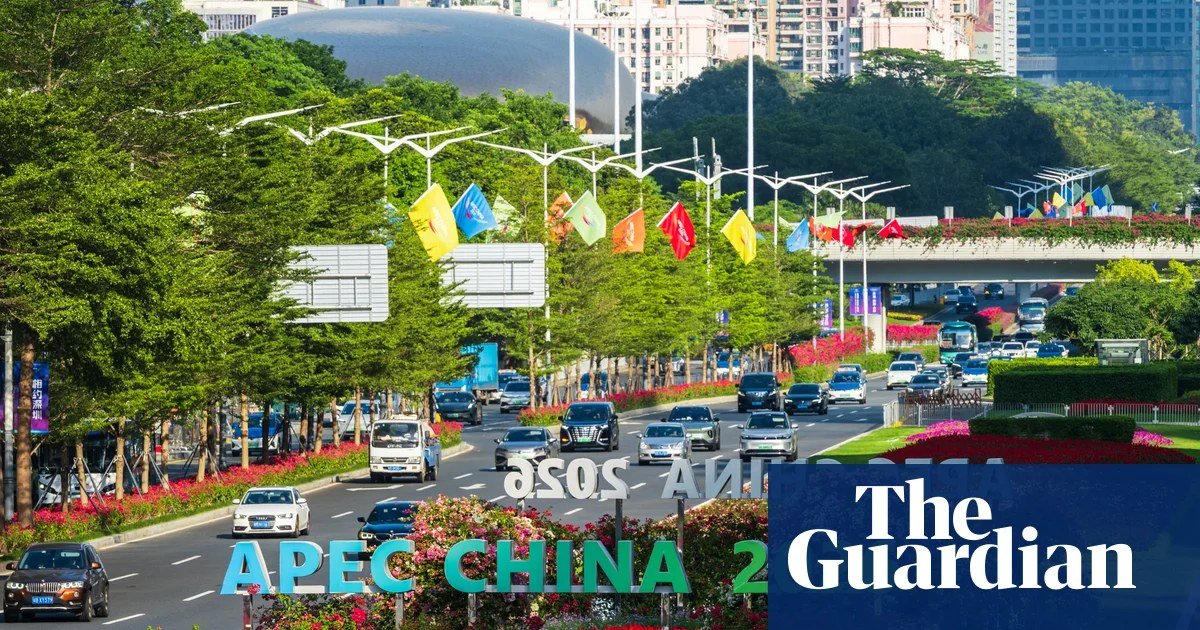
World leaders are arriving in Asia this week for a series of high-level diplomatic summits set against the backdrop of ongoing competition for influence between China and the United States. Key gatherings in China, the Philippines, and Cambodia will address critical global topics including artificial intelligence supply chains and governance, tariff reductions, the green energy transition, and regional security.
APEC Summit to Host Trilateral Discussions in Shenzhen
The Asia-Pacific Economic Cooperation (APEC) leaders' meeting begins on Wednesday in the southern Chinese technology hub of Shenzhen. APEC economies represent more than 60 percent of global gross domestic product (GDP). This year's gathering comes two weeks after U.S. midterm elections and follows reports that the head of U.S. chipmaker Nvidia engaged in an affair with a woman suspected by U.S. intelligence of being a Chinese spy.
A confirmed trilateral meeting involving U.S. President Donald Trump, Chinese President Xi Jinping, and Russian President Vladimir Putin is expected during the summit. While some observers have compared the meeting to the 1945 Yalta Conference, analysts consider a broad agreement resolving issues regarding Ukraine and Taiwan without their involvement to be unlikely. Political science associate professor Xiaoyu Pu noted that the three-way talks may hold more symbolic than substantive value, with Trump focused on nuclear arms control, Xi seeking stable relations with Washington while preserving ties with Russia, and Putin maintaining leverage over Ukraine. Taiwan, which China does not recognize, is sending the founder of hardware manufacturer Acer as its envoy to the event.
ASEAN Summit in Manila and Concurrent Gatherings
Prior to the APEC meeting, the Association of Southeast Asian Nations (ASEAN) summit begins on Sunday in Manila, Philippines, with Trump attending. On the sidelines of the Manila meeting, U.S. officials will host a meeting of the Quad, which includes Australia, India, Japan, and the United States. Concurrently, Cambodia is hosting a Francophone summit attended by French President Emmanuel Macron and Canadian Prime Minister Mark Carney.
A central regional focus at these meetings is the South China Sea, where territorial standoffs involve Brunei, China, Malaysia, the Philippines, Taiwan, and Vietnam over energy-rich waterways. Chinese Premier Li Qiang faces potential discussions in Manila regarding the disputes, particularly following remarks from Chinese diplomat Wang Yi urging the Philippines to address comments by local politicians. Negotiations for a long-sought South China Sea pact are not expected to conclude at this year's summit and will continue under Singapore's ASEAN leadership next year.
Regional Challenges and Economic Shifts
Summit delegates will also contend with regional issues such as widespread haze caused by giant Indonesian forest fires and the ongoing humanitarian and security crisis in Myanmar. ASEAN members are currently evaluating their approach toward Myanmar as the country seeks reintegration. Coup leader Min Aung Hlaing remains barred from attending, though a representative is permitted. The talks coincide with an expected International Court of Justice ruling on Thursday regarding genocide allegations against Myanmar.
Southeast Asian nations have increasingly worked to diversify their trade relationships beyond the U.S. market, expanding ties with each other and the European Union to cushion against potential trade tariffs and economic uncertainty. Following the diplomatic engagements in Asia, the G20 summit is scheduled to take place next month in Miami, Florida, where President Xi is anticipated to attend if U.S.-China relations remain stable.
0 YORUMLAR
Bu KONUYA henüz yorum yapılmamış. İlk yorumu sen yaz...